Dead Lovers: the most terrifying painting of the Middle Ages (4 photos)
What is this? And don't point to Bosch's works: he died in the 16th century, which is pure Renaissance. We're interested in the true Middle Ages, all so dark and Gothic. Worm-eaten!
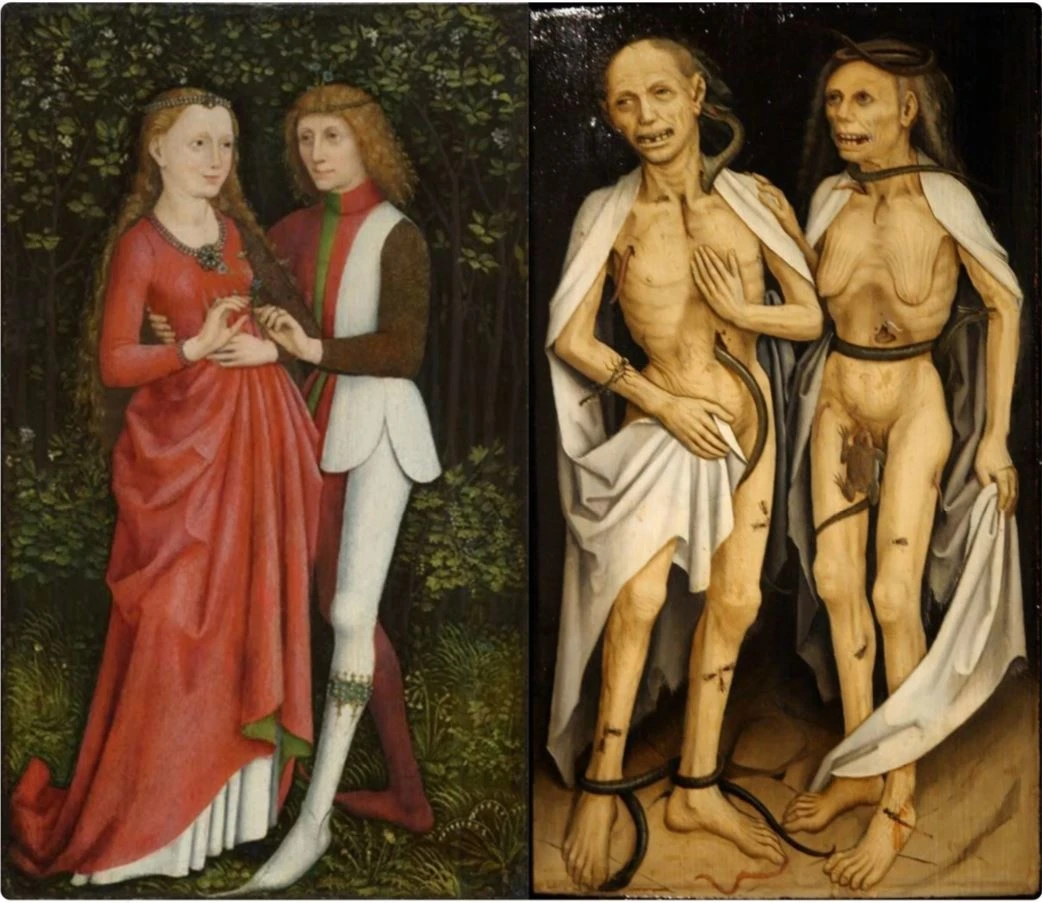
The painting, called "The Dead Lovers" (Les amants trépassés), was created around 1450. The artist's name has not been preserved; based on the style, it is now attributed to an anonymous artist nicknamed the Ulm Master. 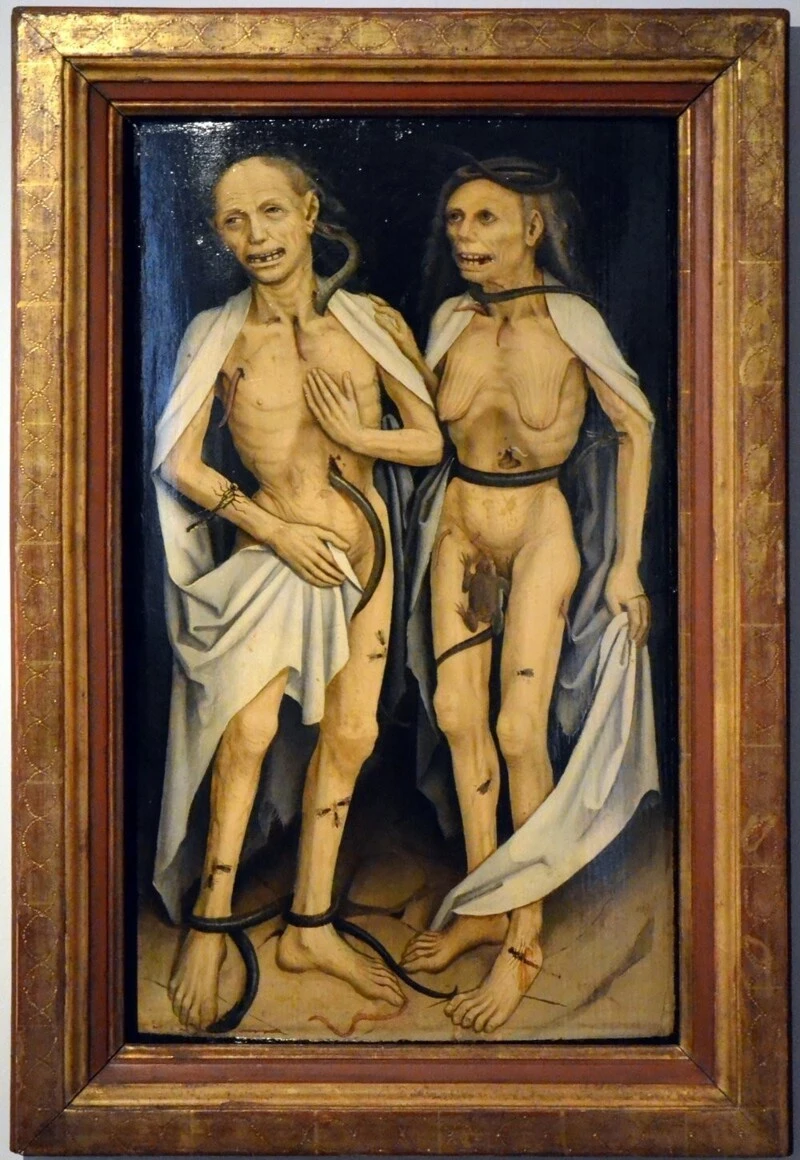
Location of the painting: Museum of Fine Arts, Strasbourg (France)
It is striking in its unusual approach to the nude body: what should ideally be exciting and pleasing to the eye is here transformed into a true horror. Because the figures depicted here are not handsome young men, but withered old men, seemingly already being devoured by grave worms (despite the rather lively expression in their eyes).
For us, such an image of a man and woman is usually associated with Adam and Eve—and traditionally such paintings serve to celebrate human beauty. But not in the case of our "Dead Lovers," which, by contrast, are even more shocking... 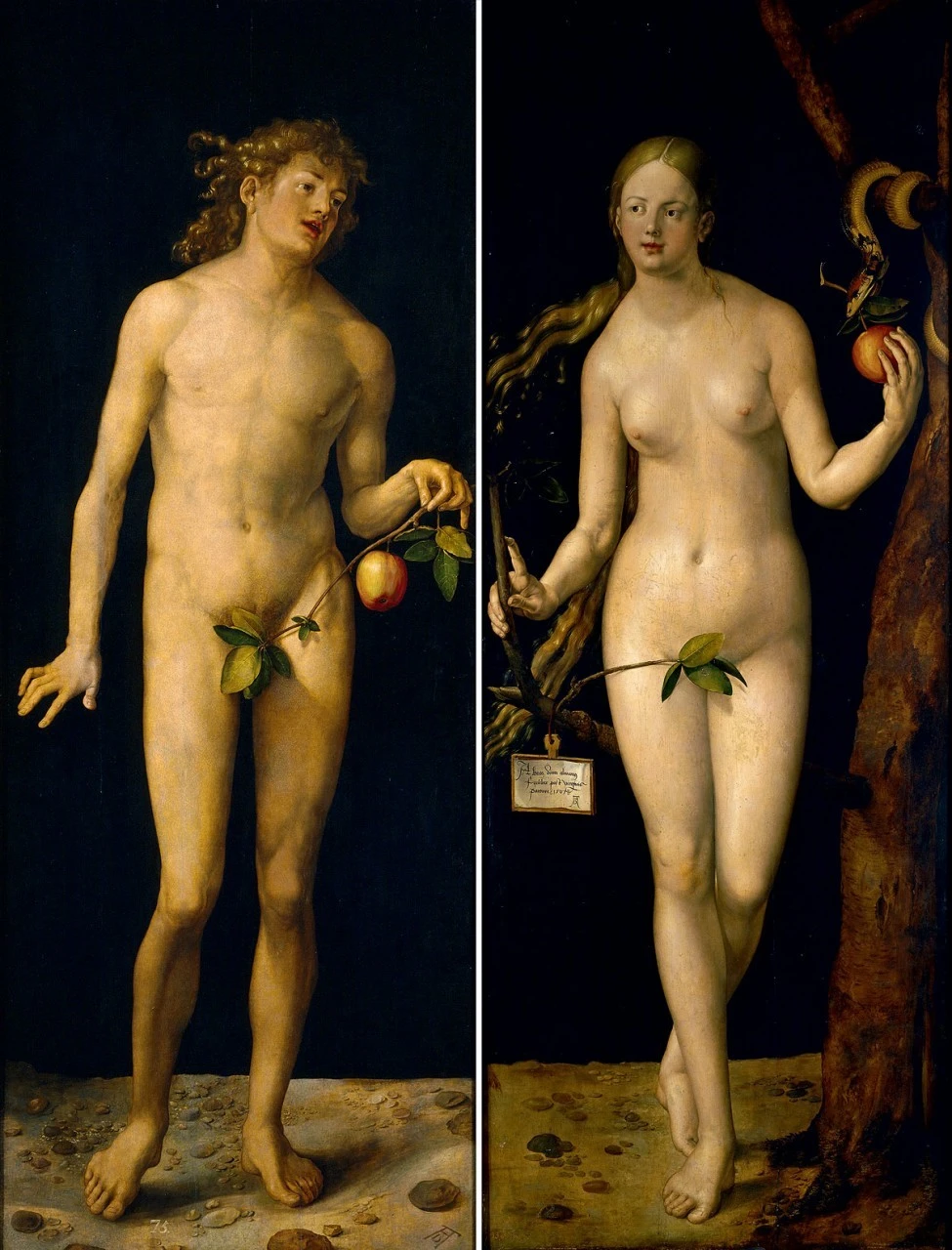
Albrecht Dürer. "Adam and Eve." Circa 1507
The idea of this allegorical medieval painting was to remind the viewer: life is fleeting. We will all die, and soon enough. The viewer, looking at this monstrosity, was meant to meditate on the idea that everything earthly is vanity, the mere futility of vanities. Including the body, health, and youth.
The painting's horror is heightened by the fact that the characters' eyes still glow with intelligence, while their bodies are already being devoured by insects, worms, and snakes.
The toothless old woman's withered breasts hang pitifully, and a huge toad sits on her genitals—a symbol of vileness and abomination.
The white rags they try to cover themselves with are a shroud.
Surprisingly, this painting is part of a diptych (the second half is in Cleveland, USA). The first panel depicts a young, graceful couple who have just become engaged. 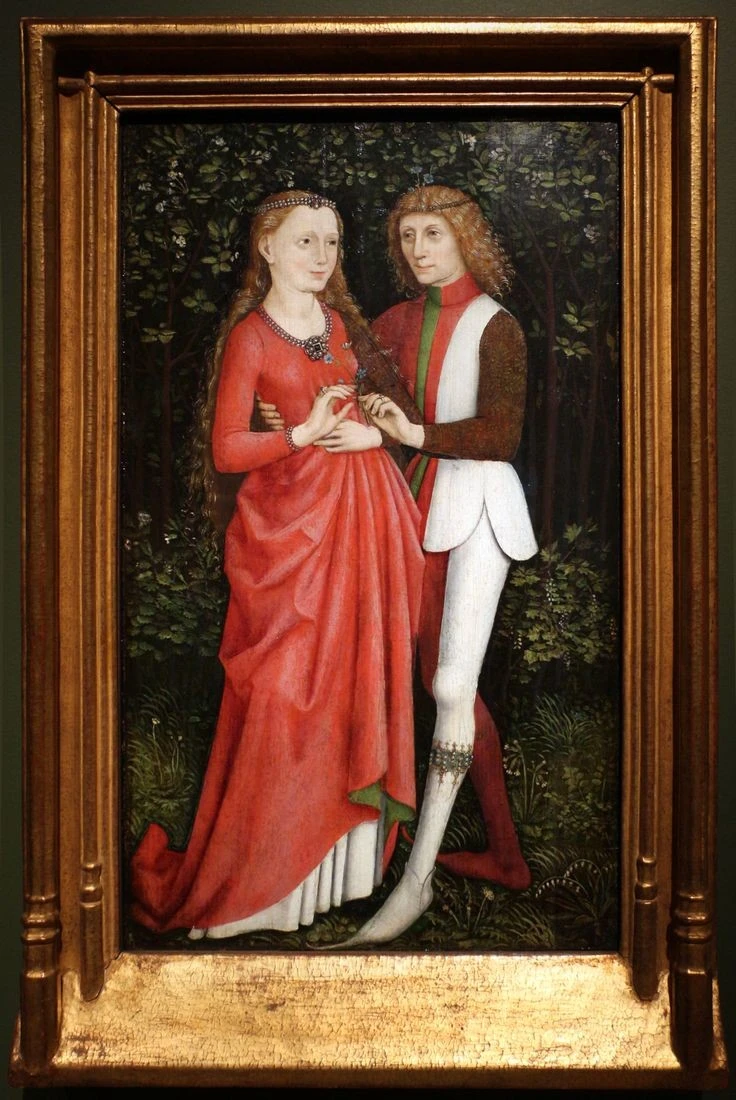
The young people are clothed, which reminds us once again of the symbolism of nudity in religious art. In Christian painting, the purpose of the naked body was by no means to evoke pleasant, voluptuous sensations (as it would become in the art of the Modern Age). No: nudity signified death, a transition to another state. Because in the afterlife, no one needs clothing. Therefore, if, for example, a painting depicted a dying person (clothed), the soul, flying from his lips and being lifted to heaven by angels, was depicted as a naked baby.
This same diptych, with its symbolism, reminds the viewer that we will all move from the stage of young, happy lovers (on the left) to the stage depicted on the right. And we will remain there for much, much longer...