Africa's Killer Lake: How Lake Nyos Claimed 1,800 Lives (9 photos)
For centuries, locals living near the Massif du Mbam mountains in northwestern Cameroon considered Lake Nyos a sacred source of life. Nestled in the crater of a dormant volcano, this expansive body of water provided surrounding villages with crystal-clear water and abundant fish. But one evening, everything changed: the tranquil lake transformed into a ruthless killer when a suffocating cloud of gas swept along its shores, taking nearly 1,800 lives. 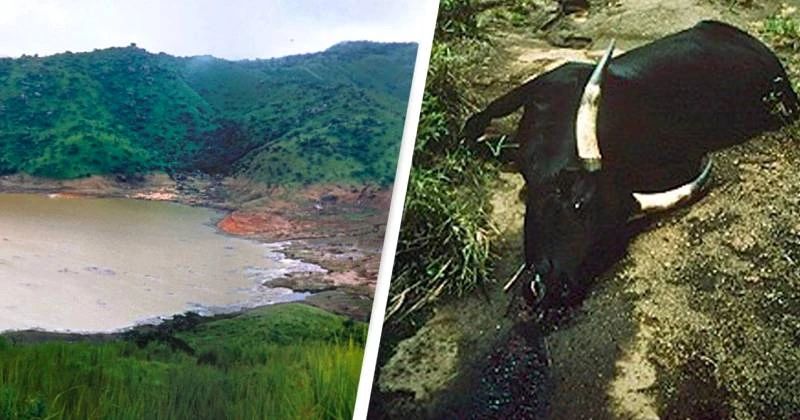
One of the most baffling natural disasters in history struck on the evening of August 21, 1986. Residents of villages along the shores of Lake Nyos were finishing dinner and winding down after a long day of work. At exactly 9:30 p.m., a sudden, low rumble echoed from the water, alarming anyone still awake—a sound no one had ever heard before. Within minutes, nearly every resident of the village closest to the shore, which shared the lake's name, was dead. 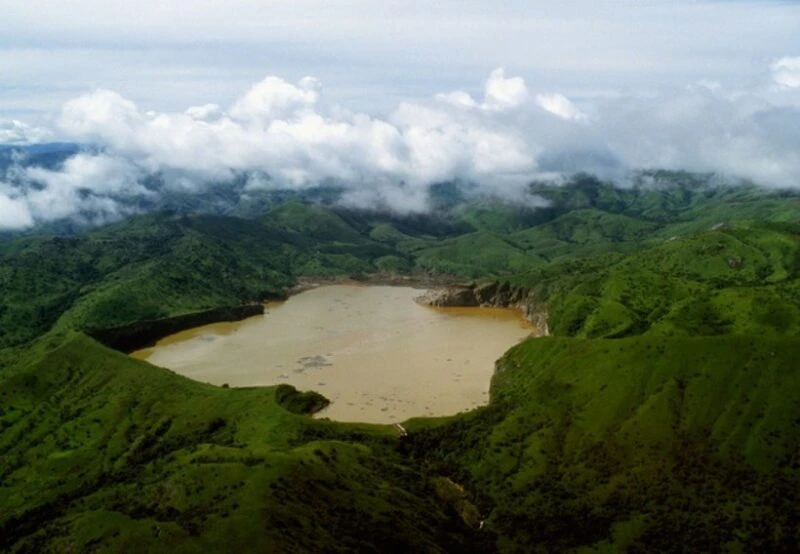
Lake Nyos
The following morning, a man riding into the village of Nyos on business froze in horror. Before him lay streets littered with the bodies of people and livestock. Dead bodies were everywhere—sprawled in yards, slumped across doorways, draped over fences, and floating in ditches. Terrified, he turned his motorcycle around and sped toward the town of Wum, eight kilometers away, to raise the alarm.
Yet by the time help arrived hours later, there were few left to save. Emergency responders found only a handful of survivors, all deeply traumatized and suffering from severe chemical burns. Most were unconscious. 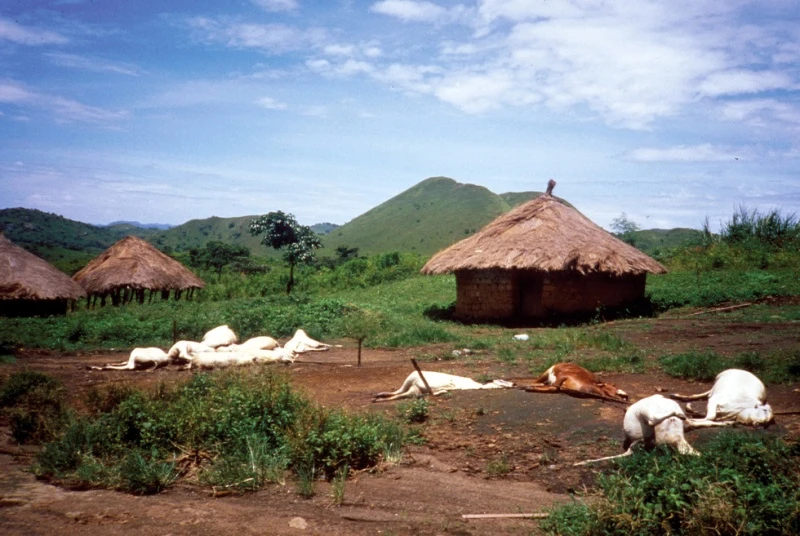
Dead livestock in the village of Nyos
The few survivors found farther from the shore could not explain what had happened—they recalled hearing a loud rumble from the lake, feeling intense heat and suffocation, and then passing out. Some woke up a full day later, only to learn that their entire families and friends were dead. In total, around 1,800 people perished. Survivor David Wanbong recalled the terrifying ordeal:
"I felt something like drunkenness. People were coughing violently, vomiting, and coughing up blood. All around, you could hear groans and weeping."
Another survivor, Francis Fang, watched his entire family die before his eyes:
"My wife collapsed from the bed onto the floor and began vomiting blood. The children were screaming in pain from terrible burns. My wife died instantly, so I grabbed the kids and ran toward the hospital. There were dead bodies everywhere." 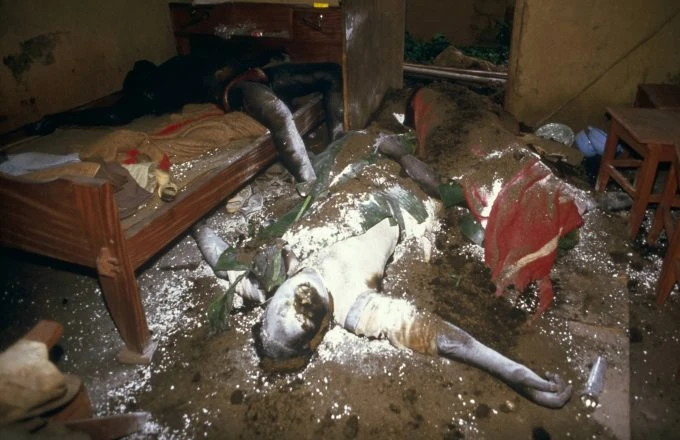
Victims found inside a hut in the village of Nyos
The horrific and baffling tragedy at Lake Nyos drew scientists from around the world to its shores. Their investigations revealed that the lake's waters were heavily saturated with carbon dioxide, which had been continuously seeping up from the lakebed. They concluded that a rare event known as a "limnic eruption" had occurred: vast amounts of carbon dioxide, trapped at the bottom for years, had suddenly erupted to the surface.
The sudden release of gas forced a 90-meter spout of water into the air, witnessed by a few surviving locals from neighboring villages. The heavy cloud of hot carbon dioxide surged toward the shore where unsuspecting villagers were resting. Traveling at speeds between 20 and 50 km/h, the deadly plume moved so fast that even those who realized what was happening had no time to escape the danger zone. 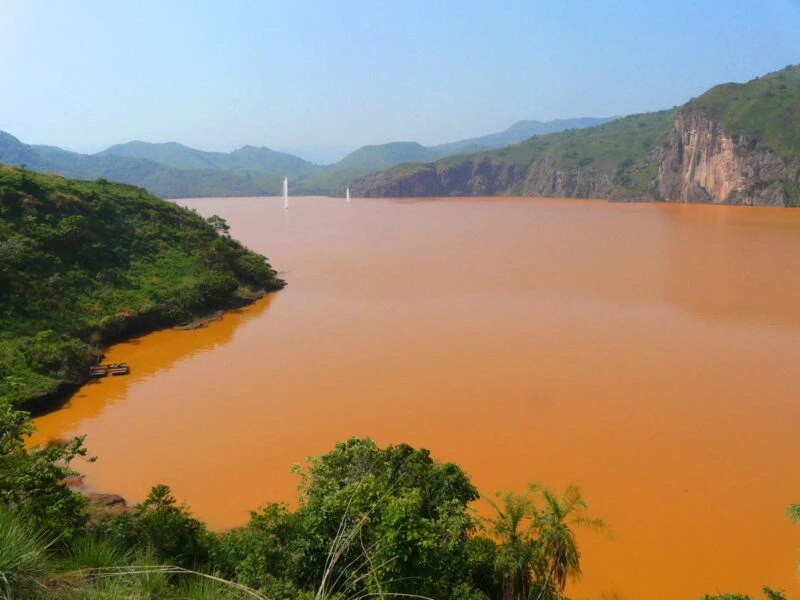
After the disaster, the once-idyllic lake was transformed beyond recognition
As the cloud swept through, it completely displaced oxygen, suffocating everyone in its path within minutes. Having claimed its victims, the gas dissipated without a trace. American scientists soon discovered that carbon dioxide was continuing to accumulate in dangerous quantities deep in the lake, meaning another disaster could strike at any moment.
Authorities evacuated thousands of residents from a 30-kilometer danger zone surrounding the lake while experts scrambled for a solution. Specialists from Cameroon's Ministry of Mines, Water Resources, and Energy proposed installing a system of pipes in Lake Nyos to safely vent the trapped gas to the surface. In 1990, small-diameter pipes were installed in the lake, which were gradually replaced with larger ones. 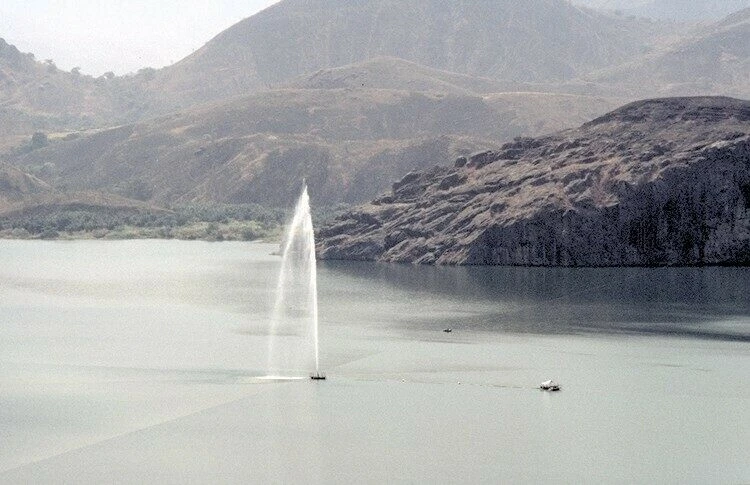
Pipes vent gas safely to the surface of the lake
However, venting the gas through early pipe systems proved to be only a temporary fix. Geologists discovered that the magma chamber beneath the volcanic line was pumping over 5,500 metric tons of carbon dioxide into the lake every year. In 2001, a revamped degassing system using large-bore pipes was designed, and by 2011, scientists confirmed its success. The gas no longer posed a threat to human life along the lake's shores.
It took another five years for carbon dioxide levels beneath the lake bed to reach safe levels, finally allowing displaced residents to return home. More than three decades after the tragedy, villagers began rebuilding their lives in settlements that had stood abandoned all that time. 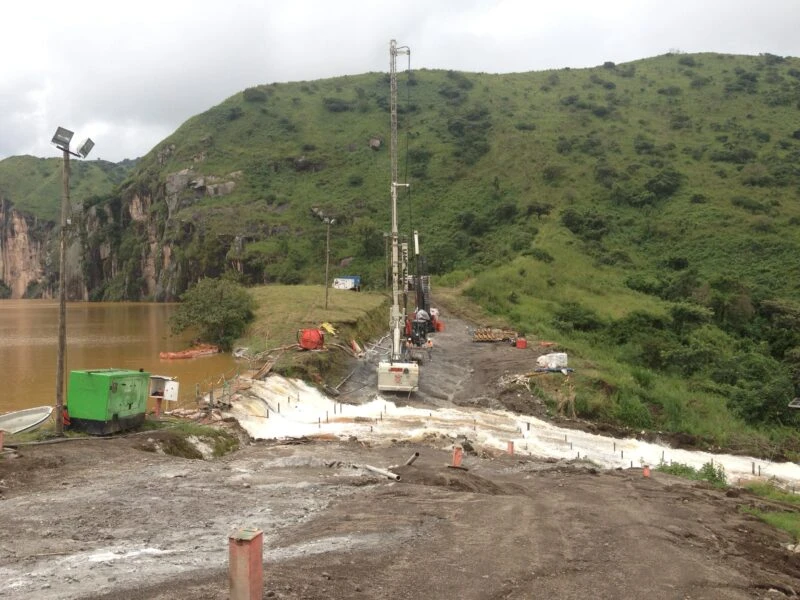
Degassing operations at Lake Nyos continue on a regular basis to this day
To this day, the exact trigger for the 1986 carbon dioxide release remains unknown. Scientists speculate it could have been a strong gust of wind disturbing the water's surface, or even a large rock tumbling into the lake from the shore. To understand what caused the tragedy, researchers began searching for historical precedents.
They soon discovered that just two years before the Nyos tragedy, a similar event had occurred at Lake Monoun, located 95 kilometers away. Nearby residents heard a loud rumble from the lake, and shortly after, 37 people mysteriously died. At the time, locals attributed the event to divine retribution, and it received little public attention. 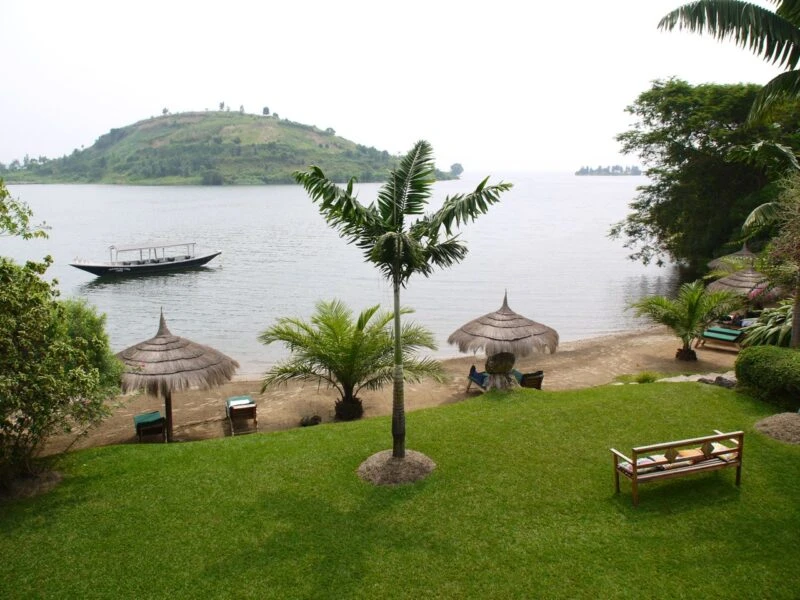
Picturesque Lake Kivu in Rwanda, a popular tourist destination, is effectively a ticking time bomb
After thoroughly surveying African lakes, experts identified only three that pose such a threat: Nyos and Monoun in Cameroon, and Lake Kivu on the border between Rwanda and Congo. While the Cameroonian lakes were fitted with degassing systems and declared safe, Lake Kivu cannot be dealt with so easily.
Lake Kivu is 1,700 times larger in surface area than Lake Nyos and twice as deep. Around two million people live in the surrounding valleys, and the Rwandan government actively extracts methane gas from its waters. Despite this active extraction, no measures have been taken to degas the lake bed, as one of the poorest countries on Earth cannot afford to spend millions of dollars solving the problem. 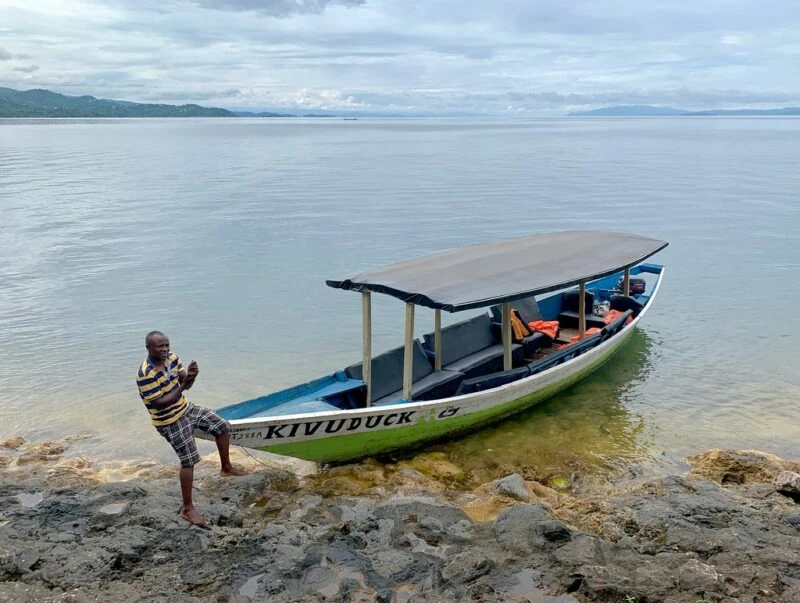
As a result, residents living along the shores of Lake Kivu remain in a deadly danger zone, risking the same fate as the villagers of Nyos. Gas continues to accumulate beneath the lake, and no one knows when it might find a way out.