10 Terrifying Parasites That Can Live Inside the Human Body (11 Photos)
We’ve all heard about deadly diseases transmitted by mosquitoes and other pests, like malaria, but few realize that terrifying creatures could be living inside us right now. Sounds like a horror movie? Parasites—specifically worms and insects—are living organisms that can freely crawl through human tissue. The worst part is that they can lurk inside you for years, or even decades, without showing a single symptom. 
Naegleria Fowleri 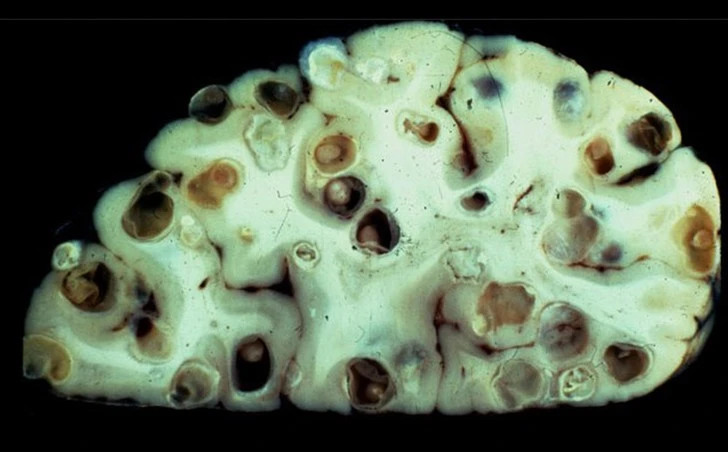
Infected brain tissue
Pop culture zombies are mindless monsters that feed on human brains, but *Naegleria fowleri* does it in real life. Known as the "brain-eating amoeba," it literally destroys brain tissue and attacks the central nervous system. Symptoms of infection include severe headaches, nausea, vomiting, and ultimately, death. Thankfully, infections are extremely rare, with only around a thousand cases reported worldwide. The parasite thrives in warm freshwater lakes and rivers, so swim with caution.
Onchocerciasis 
Blindness
*Onchocerca volvulus* is a parasitic worm responsible for causing blindness in humans, with the highest risk of infection occurring in tropical, developing regions. The parasite specifically attacks human corneal tissue, leading to a debilitating condition known as river blindness. Because the human immune system cannot effectively target the parasite, permanent vision loss is almost inevitable without treatment.
Wuchereria Bancrofti 
Elephantiasis
Often dubbed the "elephant worm," this parasite didn't earn its nickname because of its size, but rather because of the severe bodily deformities it causes. Once inside the host, the roundworm matures over the course of a year before migrating to the lymphatic system, which regulates the body's fluid balance. When adult worms cluster together and block lymphatic channels, fluid accumulates, causing limbs to swell dramatically until they resemble an elephant's leg.
Loa Loa 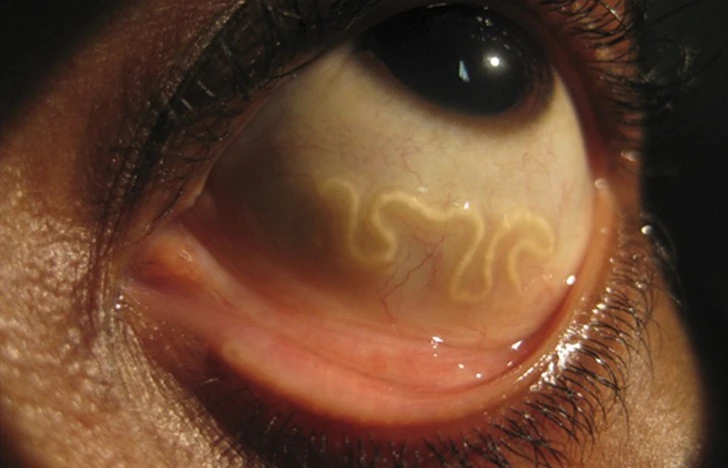
"Loa loa" might sound like a tropical cocktail enjoyed on an exotic beach, but it's actually a parasitic worm transmitted through insect bites. The larvae enter the host through a bite wound, lingering in the subcutaneous tissue to cause localized inflammation and pain. As the worm matures, it can migrate to the eye, where the host can actually feel it moving beneath the surface. Unbelievably, these worms can survive inside a human body for up to 17 years.
Botfly 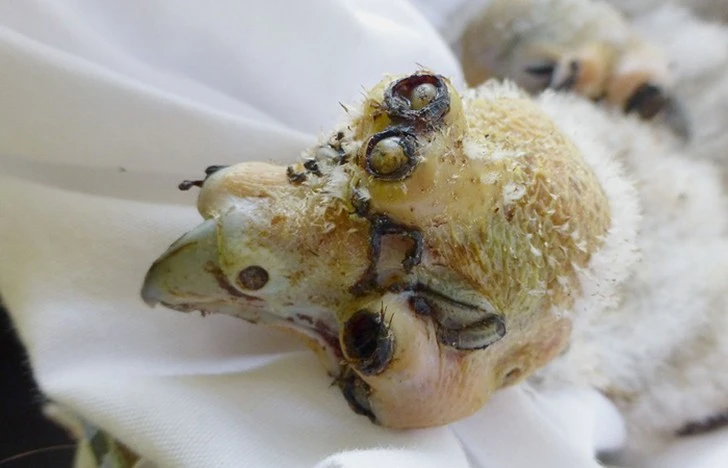
Parasitic botfly larva
Botflies are notorious for laying their eggs on or inside human tissue. If a botfly targets a victim, its eggs hatch into larvae that burrow under the skin. To grow, the larva devours surrounding flesh, carving out a painful lesion while the host feels the parasite squirming beneath their skin. Extracting the larva or its eggs typically requires surgical intervention.
Guinea Worm 
Swallowing water fleas while swimming in unfiltered water can lead to a nightmare infection. These microscopic fleas thrive in contaminated lakes and ponds, waiting for a host. Once ingested, stomach acid dissolves the flea, releasing the Guinea worm parasite (*Dracunculus medinensis*) inside the body. A year later, the worm can grow up to 3 feet (60–90 cm) long. Eventually, outgrowing its space, it burrows toward the skin's surface, causing an excruciating burning sensation. Victims naturally rush to submerge the painful sore in cold water—which is exactly what the worm wants. Water contact triggers the parasite to burst out and release thousands of larvae, while the adult worm remains trapped inside the body.
Candiru – The Vampire Fish 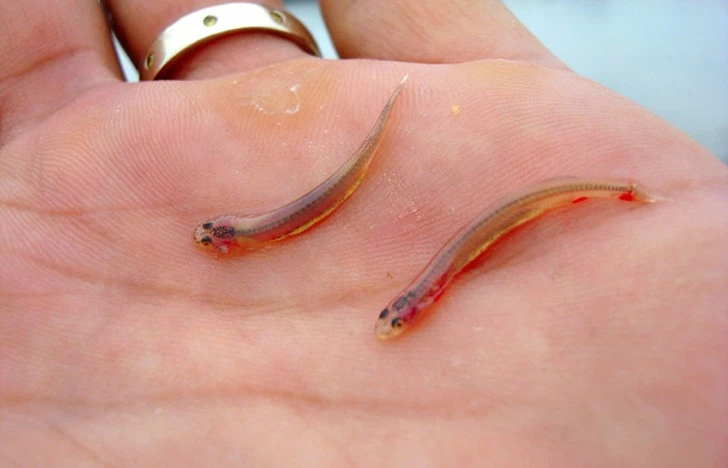
Parents and health officials always warn against urinating in rivers and lakes, but learning about the candiru will ensure you never do it again. Native to the Amazon Basin, this tiny translucent fish is drawn to the flow of urine and can reportedly enter the human urinary tract. Once inside, it anchors itself with sharp spines and feeds on blood and tissue, causing agonizing pain.
Ascaris 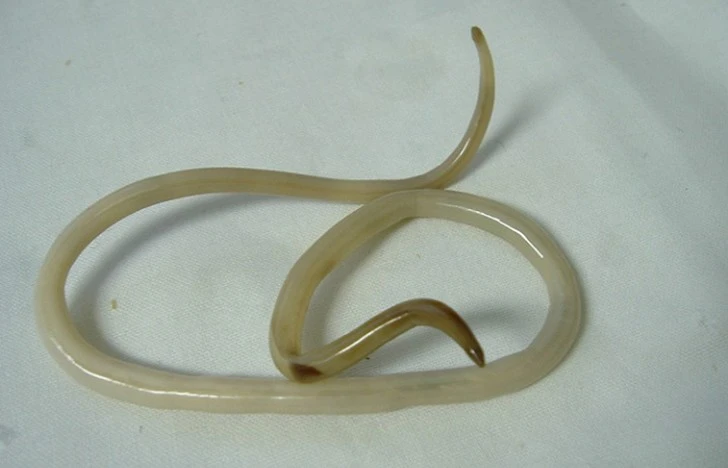
*Ascaris*, a species of parasitic roundworm, can grow up to 12 inches (30 cm) long inside the human intestines. Infection is common in rural areas with poor sanitation. A host can remain completely asymptomatic until the parasite population grows out of control, leading to severe headaches, fever, nausea, and diarrhea. Children are far more susceptible than adults due to less frequent handwashing.
Scabies Mite 
Scabies rash
The scabies mite causes intense itching and red, angry rashes across the skin. This microscopic parasite burrows into the host's skin to lay eggs and feed on blood. While mites can infest any area of the body, they are most commonly found on the backs of hands, between fingers, in armpits, and around the groin.
Pork Tapeworm 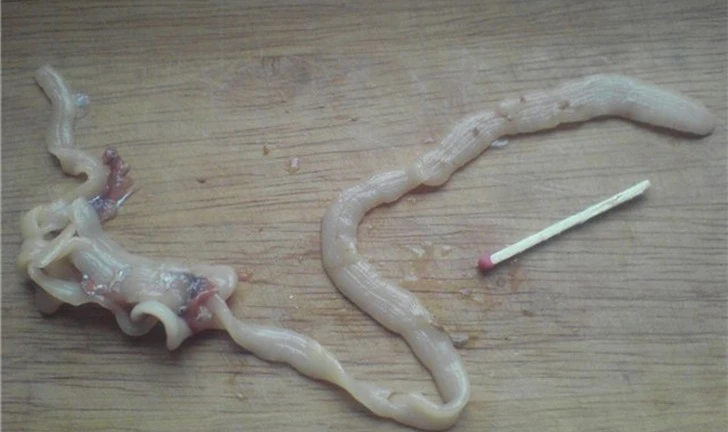
The pork tapeworm is easily one of the most terrifying parasites known to medicine. In severe cases, larvae can travel to the human brain and survive for up to 20 years. During this time, they trigger vague, common symptoms like headaches or seizures that are rarely linked to a parasitic infection until it's too late. As the cysts grow, the infection can become fatal. People typically contract the parasite by consuming contaminated water or undercooked meat.