The Anatomy of Masochism: Why Some People Crave Pain (7 Photos)
For humans, as for any living creature, avoiding discomfort—and pain in particular—is basic nature. It's how we're wired: the instinct for self-preservation is bound directly to our senses. From this perspective, the existence of masochists who derive pleasure from pain seems baffling. What drives someone to seek out pain during sex, and why are their kinks and fetishes so incredibly varied? 
To be fair, people who enjoy pain as foreplay or during intercourse remain a relative minority. Yet the statistics are surprisingly eye-opening. A 2014 survey questioned 391 people across 29 countries about their taboo bedroom preferences.
Remarkably, half of the respondents admitted to engaging in masochism at least once in their lives, while half reported taking on the role of a sadist. The study revealed that women were more likely than men to identify with masochism—69% compared to 51%—whereas men took the lead when it came to sadism, at 53% versus 45%. 
Researchers suggest that a woman’s penchant for masochism stems not from an innate love of physical suffering, but rather from gender socialization. The same logic applies to men and their sadistic inclinations.
Pain and pleasure are inextricably linked, a partnership forged at the deepest biological level. Running is a prime example: during a workout—and especially right after—most of us experience discomfort and even genuine muscle soreness.
This is completely normal and stems from the buildup of lactic acid in oxygen-starved muscle tissue. Lactic acid is a byproduct of breaking down glucose, an essential fuel for the body. As it builds up, it triggers receptors that send pain signals straight up the spinal cord to the brain. 
Yet the brain isn't just a pain processor—it's also its own pharmacy. The hippocampus, a seahorse-shaped structure deep in the brain, produces endorphins, the body's natural painkillers. By binding to opioid receptors, endorphins inhibit the neurotransmitters responsible for transmitting pain signals.
Relieving discomfort is only part of the story. Endorphins simultaneously stimulate brain regions associated with passion and affection. These internal opiates are incredibly potent—and entirely natural.
Strenuous physical exertion also releases another pain reliever: anandamide, often dubbed the "bliss molecule." It targets the body’s cannabinoid receptors, triggering sensations remarkably similar to the high produced by cannabis. 
Naturally, not all pain is created equal. There is a world of difference between a gentle spank and a strike with a heavy cane. According to the theory of "benign masochism," we experience physical pleasure from pain only when the brain recognizes it as non-threatening.
It’s similar to a craving for spicy food. Chili peppers trigger a burning sensation in the mouth and throat, yet we know it won't actually harm us. While many children reject spicy meals, many grow up to acquire a taste for hot, fiery dishes.
In BDSM, practitioners quickly learn to distinguish "good pain" from "bad pain." The sting of a flogger controlled by a dominant partner is good pain; a sudden leg cramp during a shibari session is bad pain, signaling that something is wrong. 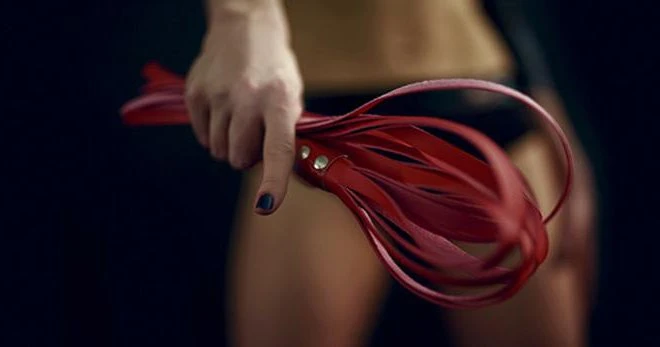
In 2011, researchers conducted a fascinating study using fMRI technology to monitor the brain of a masturbating woman. The scans revealed that orgasm activated 30 distinct brain regions, several of which were specifically responsible for processing pain.
Another study found that cancer patients who underwent procedures to block specific spinal pathways for chronic pain relief lost the ability to achieve orgasm. Once the nerve function returned, both the pain and the capacity for sexual pleasure came back together. In short, numbing the pain had inadvertently dulled the pleasure as well.
This doesn't mean pain is a prerequisite for sexual fulfillment. Rather, it underscores how deeply pain and pleasure are intertwined—not just psychologically, but on a fundamental physiological level. 
Just a decade ago, combining pain with sexual gratification was widely viewed as unnatural. Sadists and masochists were dismissed as damaged individuals acting out childhood trauma. This trope was famously depicted in
Fifty Shades of Grey
, where the lead character's kinks are framed as a byproduct of deep psychological scars.
Researchers in the Netherlands set out to test whether this stereotype held water. Psychologists surveyed 1,000 men and women who practiced BDSM, alongside a control group of 1,000 conventionally minded individuals who had never considered bringing sadomasochism into the bedroom.
The results were telling: BDSM practitioners were found to be more extraverted, self-assured, and agreeable, as well as less prone to neuroticism. They displayed higher levels of relationship trust and less anxiety over rejection than the control group. Ultimately, the BDSM cohort demonstrated better overall psychological well-being. 
However, there were a few caveats to consider that didn't make the headlines. First, the BDSM participants were recruited from a single specialized website, effectively representing a tight-knit community. Second, the control group was, on average, younger and less educated.
Around the world, consensus has shifted away from viewing masochism as a mental disorder. It is considered pathological only when practices cross the line into actual danger. That is why the core ethos of BDSM rests on three fundamental pillars: safe, sane, and consensual.