10 bloodthirsty killers from the dawn of time to the Middle Ages (11 photos)
The term "serial killer" only emerged in the late 19th century. However, this does not mean that bloodthirsty killers did not exist before then. Since ancient times, there have been many chilling tales and legends about the horrific crimes of serial killers—individuals responsible for the deaths of dozens, or even hundreds, of people. Here, we present the stories of 10 such bloodthirsty killers. 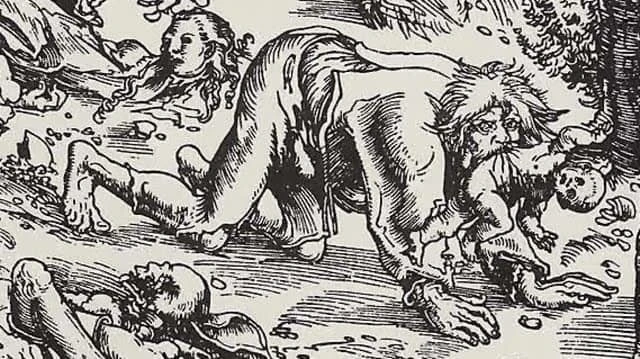
Liu Pengli 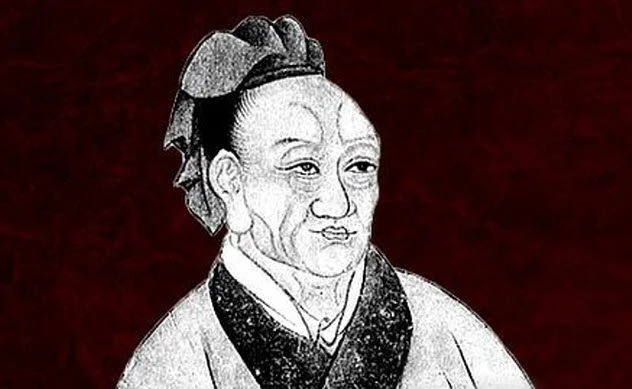
Liu Pengli was the Prince of Jidong and a cousin to the emperor. He was notorious for his cruelty. Together with his associates, he would raid villages, raping, robbing, and murdering the local inhabitants for his own amusement. It is estimated that he killed around 100 people. The people lived in constant fear of Liu Pengli. Eventually, the emperor learned of his actions; rather than having him executed, he stripped him of his titles and his fortune.
Anula of Anuradhapura 
The cruelty of this woman stemmed from her tendency to fall in love easily. Princess Anula murdered her husband after becoming infatuated with a palace guard. Then she became infatuated with a carpenter and, naturally, poisoned her former lover. Later, the princess took a fancy to a lumberjack and got rid of the carpenter. Then came a court priest who also caught Anula’s eye, so the lumberjack had to be poisoned. She lived with the priest for six months before poisoning him as well. This pattern would have continued, had the queen not been overthrown and burned alive.
Dhu Shanatir 
Dhu Shanatir is one of the earliest serial killers known to history. He lived in 5th-century BC Yemen and worked as a merchant. At that time, bloody murders committed by high-ranking members of society were not uncommon, as their status often allowed them to evade punishment—and Dhu Shanatir was no exception. He would lure boys into his castle, assault them, and then throw them from the windows. While the exact number of his victims is unknown, it is estimated to be in the dozens. However, one of his intended victims refused to accept his fate; the young man fought back against Shanatir and stabbed him to death.
Alice Kyteler 
Alice Kyteler of Kilkenny was one of the first women in Europe to stand trial on charges of witchcraft. She allegedly murdered her first three husbands by poisoning them. When the fourth husband of this "witch" fell ill, his children concluded that Alice had poisoned him. She was also accused of rejecting Christianity, wearing amulets, and even having a liaison with a demon. The court found Alice Kyteler guilty of murder, and she was burned at the stake.
Gilles de Rais 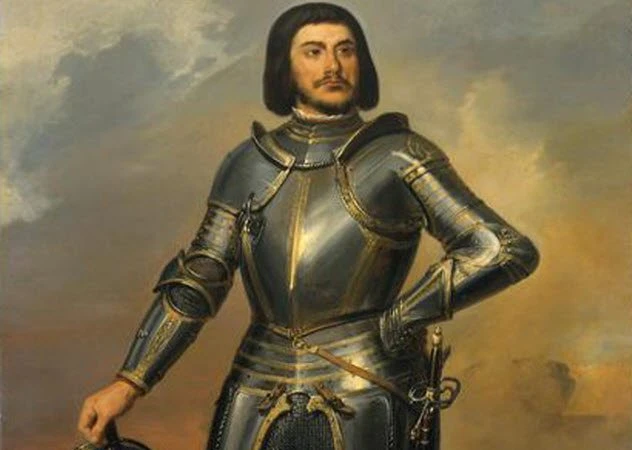
Gilles de Rais was a French nobleman, a valiant warrior, and a wealthy heir. He fought on the battlefield side by side with Joan of Arc herself. However, that is not what he became known for. Gilles de Rais took an interest in alchemy and the occult; he attempted to summon demons and sacrificed children. Upon abducting children, he would torture, rape, and murder them with great relish. His preferred method of killing was decapitation, though he also slit their throats, dismembered them, or broke their necks. The number of his victims reached into the hundreds. Ultimately, Gilles de Rais’s atrocities came to an end when he was captured and executed by hanging.
Peter Stumpp 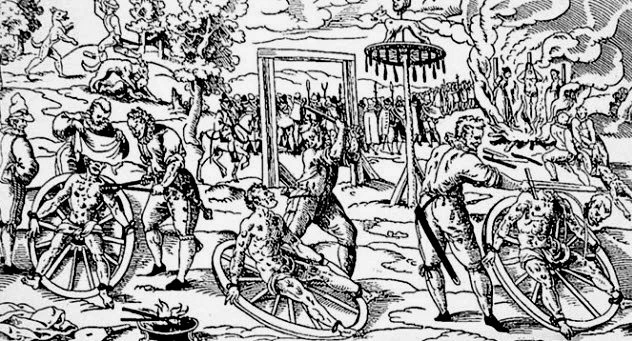
Peter Stumpp was a wealthy farmer who lived in Bedburg, Germany, during the 16th century. His wealth and status allowed him to become highly influential in the town and earn the trust of his fellow citizens. This, in turn, enabled Peter to conceal his diabolical deeds. A series of horrific killings of both humans and livestock occurred in the town, and the residents blamed wolves. However, when several hunters tracked what they believed to be a killer wolf, they discovered Stubbe instead. He became known as the "Werewolf of Bedburg" because, by his own admission, the devil himself had granted him the ability to transform into a wolf. He was found guilty of a string of crimes—including murder, incest, cannibalism, rape, and consorting with demons—and was subsequently beheaded.
Gilles Garnier 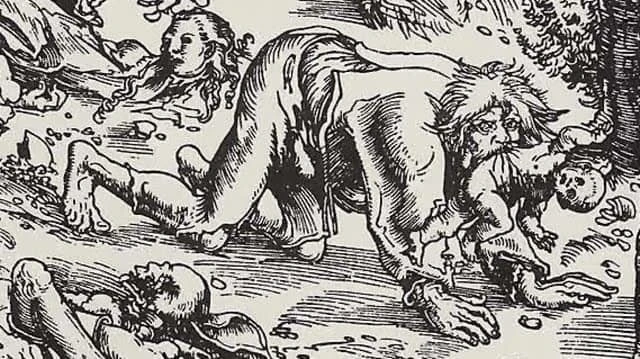
Another tale of a serial killer identified as a werewolf. Gilles Garnier was a recluse who lived a solitary life in eastern France. Terrifying rumors circulated about him—rumors that ultimately proved to be true. Garnier murdered people, consumed their flesh, and even fed it to his own family. Local peasants, believing a man-eating wolf was prowling the area, set out to kill it. Instead, they stumbled upon a strange figure hunched over a child—it was not a wolf, but Garnier. The killer was convinced that he was under the protection of demons, who had bestowed upon him unique hunting abilities. He was found guilty by the court and burned at the stake in 1573.
Peter Niers 
In late 16th-century Germany, Peter Niers led a gang of criminals and ultimately committed 544 murders. He was arrested and tortured in 1577, though he confessed to only 75 of the killings. The murderer managed to escape, but was recaptured in 1581. He claimed to have learned the art of invisibility, which he alleged was the reason he had managed to evade imprisonment for so long. Believing that the Devil would grant him supernatural powers, Niers carried out numerous murders as part of black magic rituals. Twenty-four of his victims were pregnant women. Upon his final arrest, Niers was executed by being broken on the wheel while still alive, followed by quartering.
Elizabeth Báthory 
Elizabeth Báthory was born in 1560 in Transylvania into a high-ranking family. Her actions earned her the moniker "the Blood Countess." In 1610, grim rumors reached the Habsburg court regarding the mass murder of young women, allegedly taking place at Čachtice Castle—a property owned by the Countess. Báthory believed that the blood of these young women helped her preserve her youth. She was arrested alongside her accomplices and spent the final years of her life in confinement.
Björn Pétursson 
Björn Pétursson was a farmer from Iceland. In his youth, he had a strange dream: a mysterious man offered him 18 pieces of human flesh to taste, then pointed to a stone on a mountain and told him to take what lay beneath it. The next day, the young man found an axe under the stone and felt an uncontrollable urge to kill. Following this, townspeople and travelers began to disappear under mysterious circumstances. Björn confessed to the murder of 18 people and was beheaded in 1596. It was later determined that the actual number of his victims was far greater than what he had claimed.