What Amelia Dyer, the "Ogress of Reading," became notorious for (10 photos)
History knows of many child killers whose crimes are truly chilling. Yet, all such atrocities pale in comparison to the cynical, brutal acts of an Englishwoman named Amelia Dyer, who, in the 19th century, took the lives of more than four hundred children. Why did this woman kill, and how was it possible that she remained undiscovered for so many years? 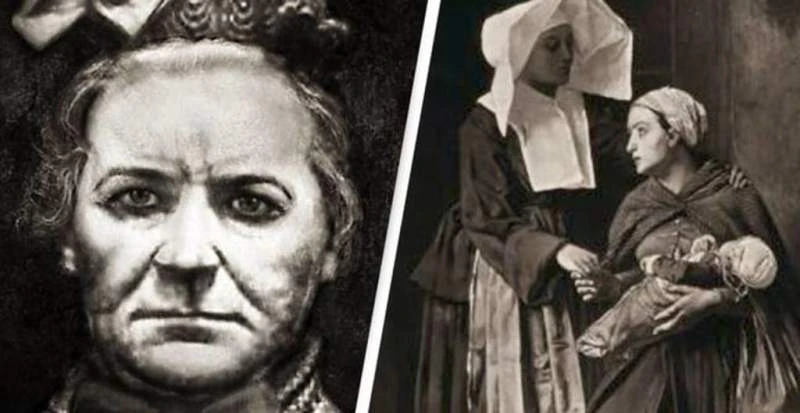
The central figure in this grim tale, Amelia Elizabeth Dyer, was born in 1836 in the town of Pyle Marsh, in southwestern England. Unlike most serial killers and monsters, she was born into and raised by a stable, well-off family. As a child, Amelia enjoyed reading, writing poetry, theater, and needlework. Her parents owned their own business and spared nothing for their daughter. 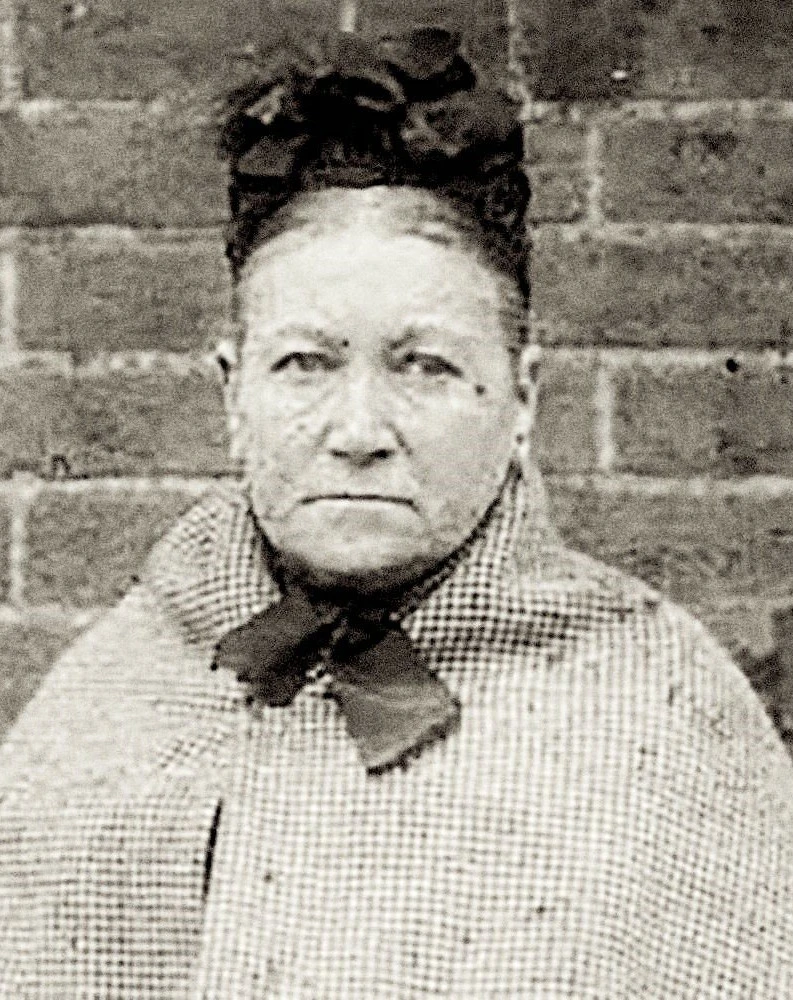
However, at the age of 12, Amelia’s childhood came to an abrupt end. Her mother fell seriously ill, losing her sanity. The young girl was forced to abandon her many hobbies to become a caregiver for her mother, whose behavior had become erratic and unstable. Experts would later suggest that this specific chapter in Dyer’s life had a damaging effect on her psyche, triggering dark, latent processes within her mind.
A Fateful Acquaintance
Following her mother’s death, Dyer left her family to live on her own. Before long, she married a man named George Thomas, who was 35 years her senior. Wishing to avoid being a financial burden on her husband, she trained as a nurse and secured a position at a local hospital.
However, the family’s income remained meager, leaving Amelia unable to afford many of life’s comforts. During her training, she met a nurse named Ellen Dane, who ran a private care home. In Victorian England, such establishments were known as "baby farms," and they were in high demand. 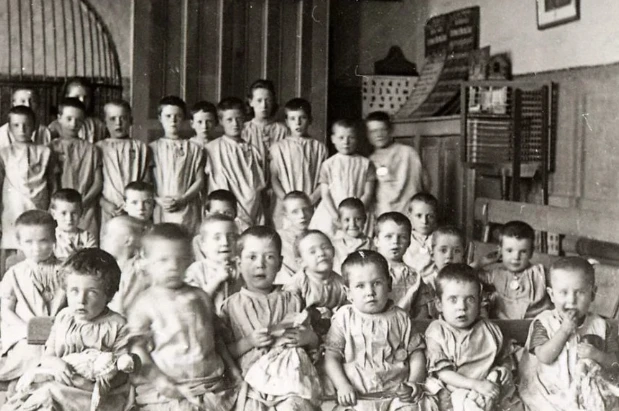
The primary residents of these homes were the children of single mothers. 19th-century British society kept a close watch on moral standards, and women who gave birth out of wedlock often faced severe social ostracization. Consequently, many young mothers with the means to do so preferred to place their children in a "baby farm" and pay for their upkeep.
Ellen Dane quickly showed Amelia Dyer the ropes. The secret to Ellen’s substantial earnings lay in the fact that she spent only a negligible fraction of the money she received on the children in her care. The children suffered from malnutrition and illness, and before long, they would pass away. Moreover, there was no need to inform the child’s mother—the payments would simply keep coming.
Amelia Dyer’s "Baby Farm"
For a time, Amelia hesitated to embark on such a dubious enterprise. But after her husband fell ill and died, the family’s savings began to dwindle rapidly. Dyer was left with little choice but to open a home for infants. It was a low-risk venture, as "baby farms" in England were entirely unregulated at the time—and mothers almost never came to visit their children. 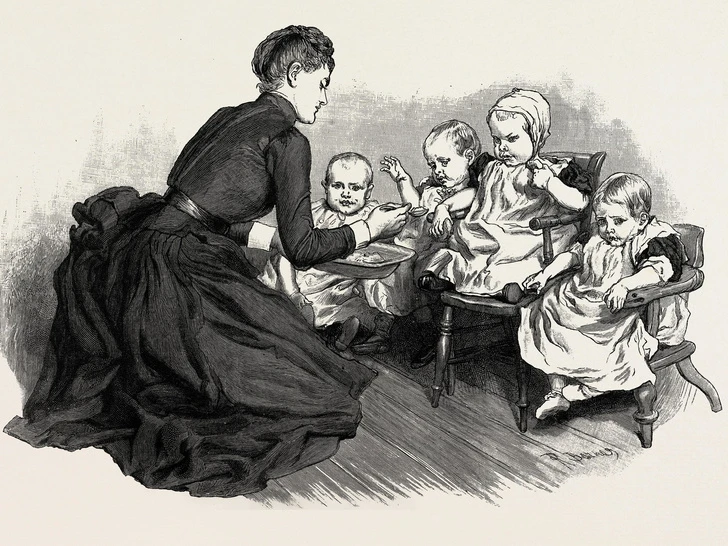
If a child died, the mothers almost never contacted the police, fearing that their secret—and the potential damage to their reputation—would be exposed. Even when the police did take an interest in a child’s death, there were rarely any consequences for the proprietor. Infant mortality in 19th-century Europe was high; coroners were generally not very rigorous in their examinations, often recording causes of death such as "infant was weak from birth" or "death due to a lack of breast milk."
This environment gave the proprietors of these homes—and their staff—a free hand. To keep the children from crying, they would mix alcohol or even opium into their milk. Those who were particularly restless were simply starved until they lacked the strength to cause any trouble. In some cases, the solution was even more direct: the children were killed.
Initially, Amelia Dyer ran her establishment conscientiously; the children lived in decent conditions and were well-fed. The home earned a solid reputation, and there was no shortage of clients. To cultivate the image of a respectable, family-oriented woman, Amelia even married again. She had two daughters during this marriage, though she soon abandoned her husband, leaving the girls in his care. Their fate was of no further concern to Dyer, who devoted herself entirely to the home. 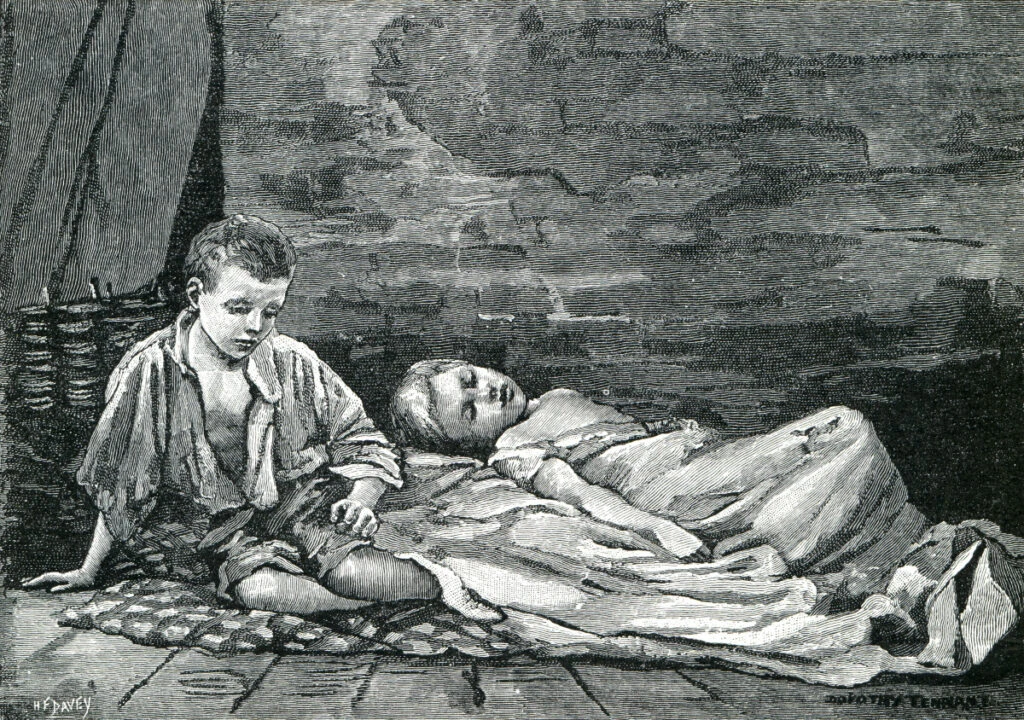
Amelia soon realized that running an honest business would never yield significant profit. Recalling the stories she had heard from Ellen Dane, she began to adopt those same principles. At first, the proprietor acted with caution—neglecting to give the infants water or leaving them outside in the cold. Dyer avoided any direct physical violence.
Profiting from the Deaths of Children
But soon she developed a taste for it, and there were so many "accidental" deaths that the police began to take an interest in her establishment. In 1879, Amelia was arrested, tried, and sentenced to six months of hard labor for criminal negligence toward those in her care. After serving her sentence, she resumed her activities—only this time, rather than staging accidents, she simply murdered the children. 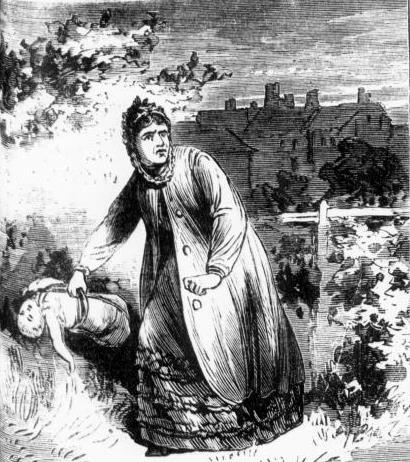
The proprietor of this "baby farm" would hide the bodies; on the rare occasions when a death appeared natural, she would notify a coroner. Amelia frequently came to the attention of the authorities, and there were several attempts to bring her to trial again. However, Dyer had learned how to feign mental illness—a skill she had picked up in her youth while living with her own deranged mother. Consequently, instead of being sent to a penal colony, she would spend a short time in a psychiatric hospital before returning to her old ways.
Over time, the killer brought one of her daughters, Polly, into the fold. Although Polly was married and raising children of her own, she nonetheless agreed to become her mother’s accomplice, helping her conceal the bodies of the murdered infants. Most often, the corpses were simply cast into the River Thames, which at the time served as the city’s sewer system. To do this, the women chose a secluded spot near the Caversham Lock, away from prying eyes. 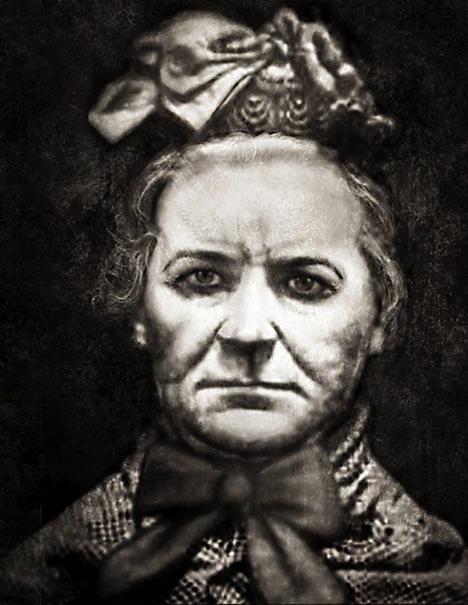
This "family business" built on the blood of children was thriving, and money flowed into Amelia Dyer’s hands like a river. But everything changed in an instant. In March 1896, sailors on a barge traveling along the River Thames spotted a small bundle in the water. Upon pulling it aboard, they discovered the body of a little girl inside. She was identified as Helen Fry—a child her mother had left at the "care home" just days earlier.
The Exposure
Tracking down Amelia Dyer’s "baby farm" proved simple. A stamp bearing the name and address of the establishment was found on a corner of the swaddling cloth in which the dead child had been wrapped. This piece of evidence proved decisive in the case against the serial child killer. To avoid alerting the perpetrator, the police employed an undercover agent: a woman who approached the home under the guise of seeking care for a child. 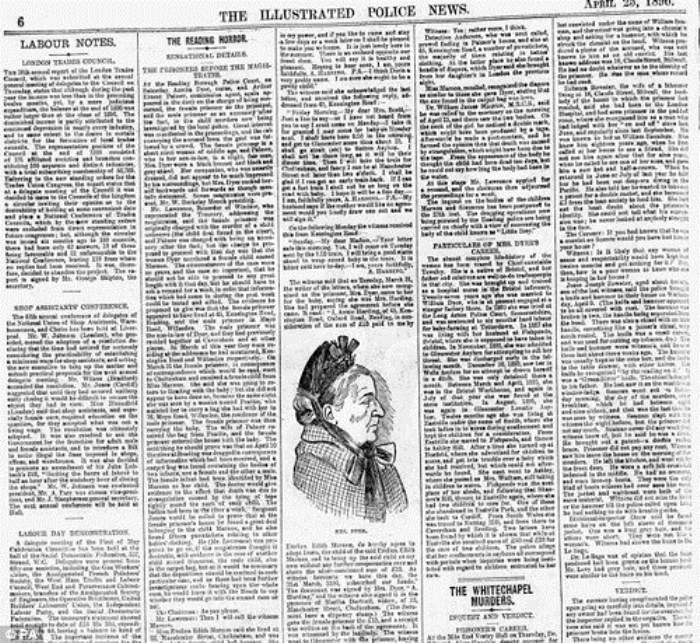
A London newspaper article detailing the Dyer case
As soon as Amelia opened the gate, police officers swarmed into the yard of her establishment. Even a cursory search of the premises and the surrounding grounds revealed that Dyer had killed at least 200 children left in her care. News of these horrific crimes spread rapidly across England. The press dubbed the killer the "Ogress of Reading," though Dyer never actually ate any children.
Amelia was arrested on April 4, 1896, and faced the prospect of the death penalty. Soon, a horrific secret was uncovered at Caversham Lock, where the remains of numerous children were found on the riverbed. Despite the overwhelming evidence, Amelia denied everything, eventually confessing to only one murder—that of a young girl named Doris Marmon. 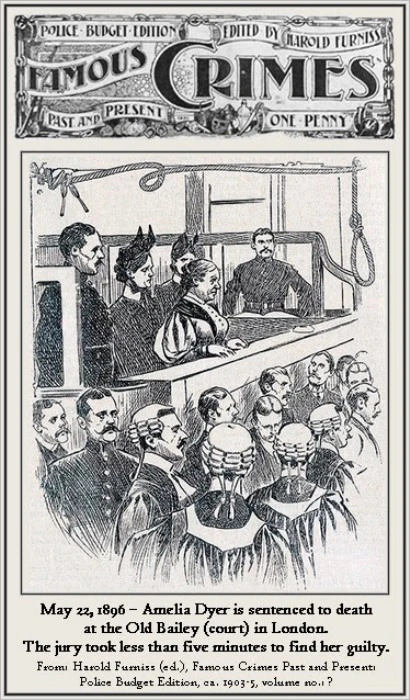
The Trial of Amelia Dyer
The trial took place on May 22, 1896. A dense crowd of Londoners surrounded the courthouse, demanding that the child-killer be handed over to them so they could take matters into their own hands. The jury reached a verdict in just four minutes. It is not hard to guess that the punishment for this monster was death. On June 10, 1896, Amelia Dyer was hanged. Her final words were: "I have nothing to say."
A Grim Aftermath
The investigation into the crimes of the "Ogress of Reading" continued even after her death. In total, investigators documented over 400 murders. Sadly, the story of this child-killer did not end there. A couple of years after the high-profile trial, an infant—barely alive—was discovered on a suburban train in London.
It turned out to be a child who had previously been left in the care of a certain Miss Stuart. However, once she had the money, she abandoned the child in a railway carriage and fled. The police managed to discover that Stewart—who also went by the name Mary Ann—was actually Amelia’s daughter, Polly. Unfortunately, she managed to evade justice; she could not be tracked down. 
The case of the "Reading Ogress" caused a massive public outcry. It finally drew the authorities' attention to the issue of "baby farms." Parliament enacted several laws to regulate the operations of these establishments. Despite this, those who murdered children continued to operate in England for a long time, and from time to time, horrific crimes against children would surface here and there.