6 Brutal Beauty Traditions Women Endured Throughout History (12 Photos)
The phrase "fashion victim" is a staple of modern vocabulary, yet few know its dark origins. For centuries, women have subjected their bodies to extreme torture in pursuit of beauty ideals—mutilating organs, contracting chronic illnesses, and all too often paying with their lives for the desire to be irresistible. Here is a look at some of the most shocking and cruel beauty traditions across different cultures and eras. 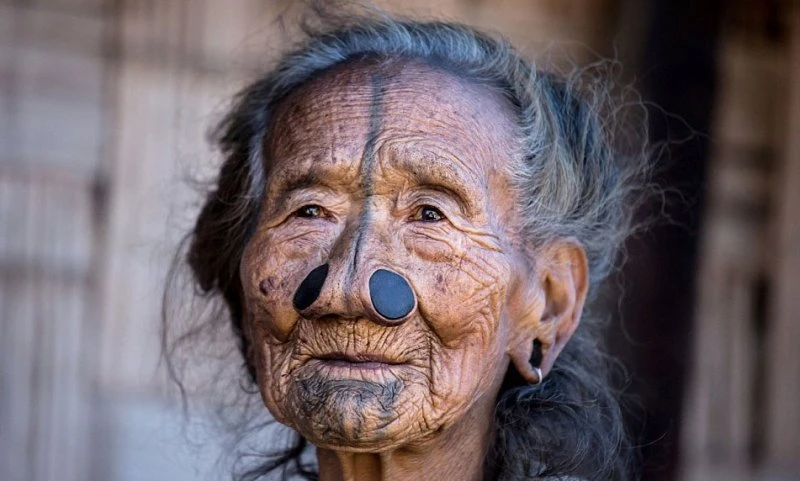
"Naked Fashion" in 18th-Century Europe
In the late 18th century, the term "fashion victim" was coined to describe young women obsessed with Empire-style fashion. Seeking to emulate classical Greek statues, they wore almost exclusively sheer, lightweight chiffon dresses. 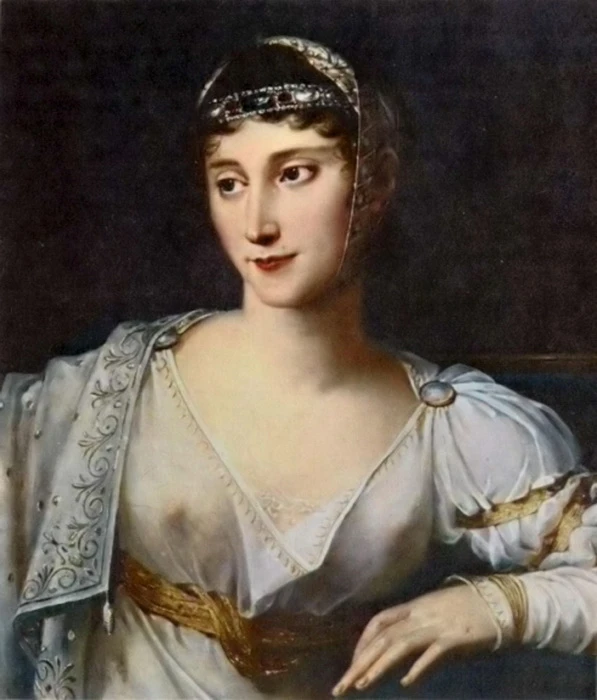
Draped in flowing, translucent gowns—often dampened with water to cling dramatically to the skin—socialites braved freezing winter weather, frequently contracting pneumonia or tuberculosis. Two centuries ago, these conditions were practically a death sentence. In 1802, the French publication
Journal de Mode
issued a stark warning to its female readers, urging them to visit Montmartre Cemetery to see just how many young women had fallen victim to "naked fashion." 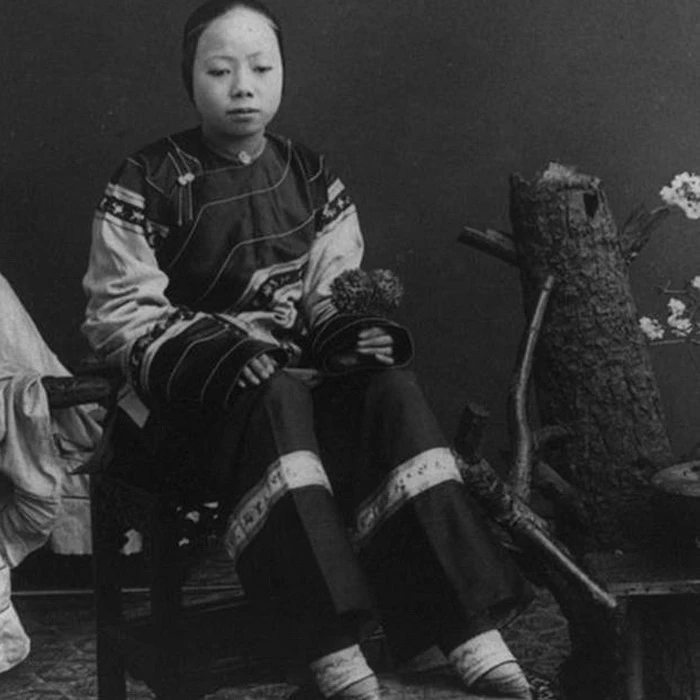
"Lotus Feet" in Ancient China
Yet compared to the ancient customs of other cultures, the hardships of European fashion seem mild. Women faced far grimmer realities in societies where beauty was defined by bodily modification. In Ancient China, for instance, tiny feet—known as "lotus feet"—were considered the height of elegance. 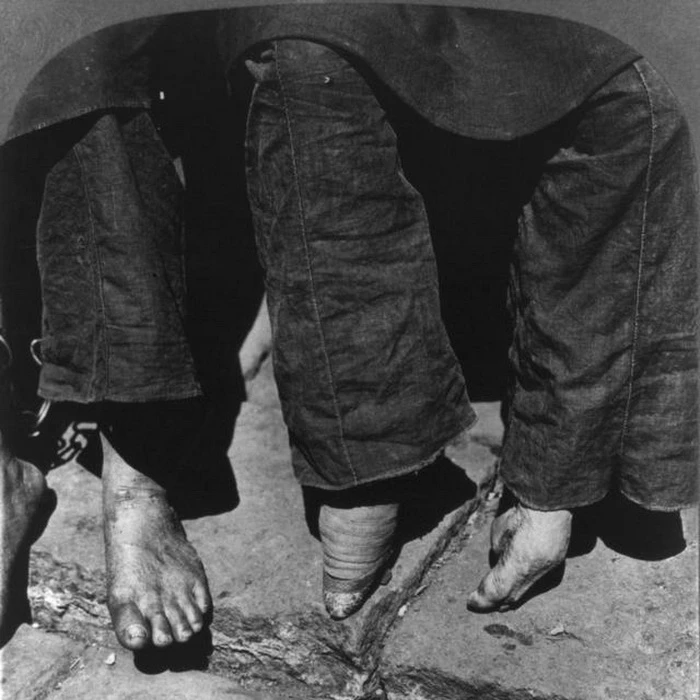
A healthy foot alongside a bound foot
Despite the poetic name, foot-binding left feet looking more like hooves. Starting around age four, a young girl's feet were tightly bound, folding four of her toes under the sole until the foot was compressed to just 3 to 4 inches long. The process caused severe bleeding, infection, foul odors, broken bones, and ingrown nails. Usually practiced in affluent families, bound feet were a symbol of high status and a prerequisite for a good marriage. Curiously, a husband would rarely see his wife's bare "lotus feet"—she kept her delicate embroidered shoes on even in bed. 
The Elongated Necks of Kayan Women
For the Kayan people, female beauty was measured by a swan-like neck—a prized feature that was anything but natural. Beginning at age five, girls were fitted with their first set of heavy brass coils. More coils were added over the years leading up to marriage. 
The elongated necks of Kayan women
The coils could weigh up to 20 pounds (9 kg). It was believed that a longer neck guaranteed a prosperous marriage. Notably, as punishment for infidelity, a husband could remove his wife’s coils, effectively condemning her to death from suffocation as her weakened neck muscles could no longer support her head. 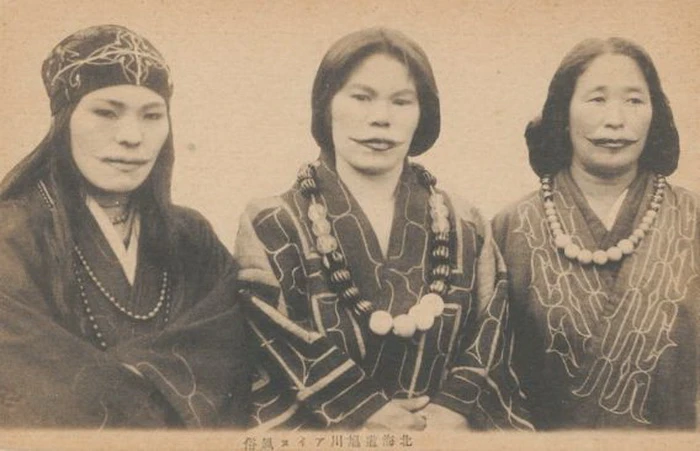
The Tattooed "Smiles" of Ainu Women
Equally painful was the lip-tattooing tradition practiced by Ainu women. Using sharp blades, cuts were made around the mouth to form a wide smile, and the wounds were rubbed with soot. This painful ritual was believed to bring domestic harmony and peace in the afterlife. 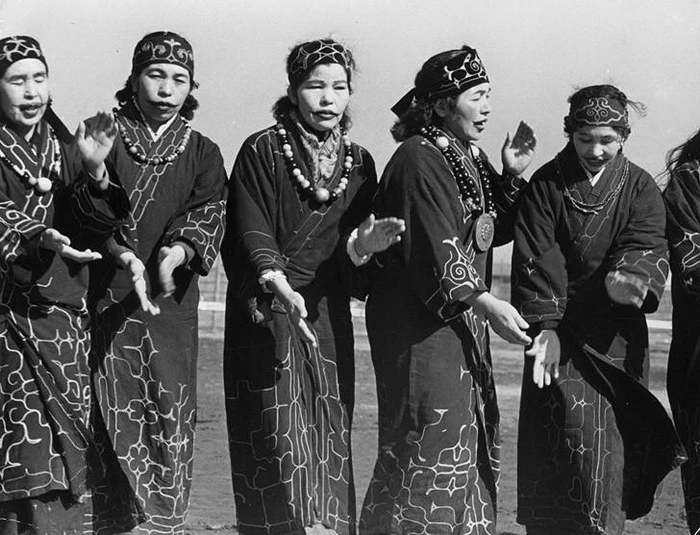
The distinctive tattooed smile of an Ainu woman
Anthropologists consider the Ainu facial tattoo to be one of the world's oldest traditions, practiced for centuries. Despite strict bans imposed by the Japanese government, Ainu women continued the practice well into the 20th century. The last woman with a traditional facial tattoo passed away in 1998. 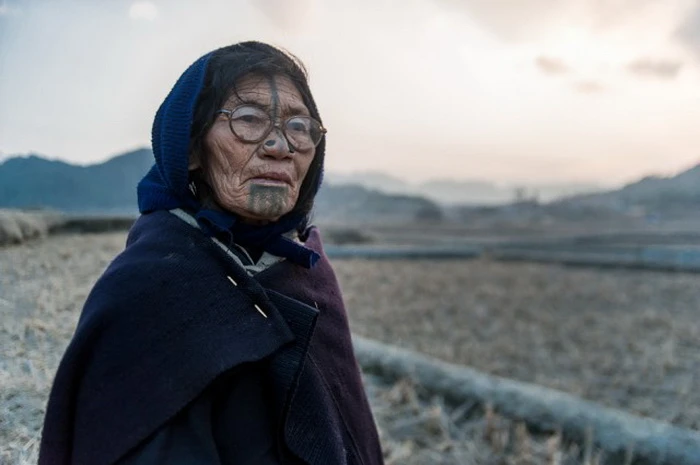
Facial Modifications of Apatani Women
Meanwhile, women of the Apatani tribe modified their appearances for the opposite reason: to make themselves deliberately unappealing. They inserted large wooden plugs into their nostrils and tattooed their faces to prevent men from neighboring tribes from kidnapping them as wives. 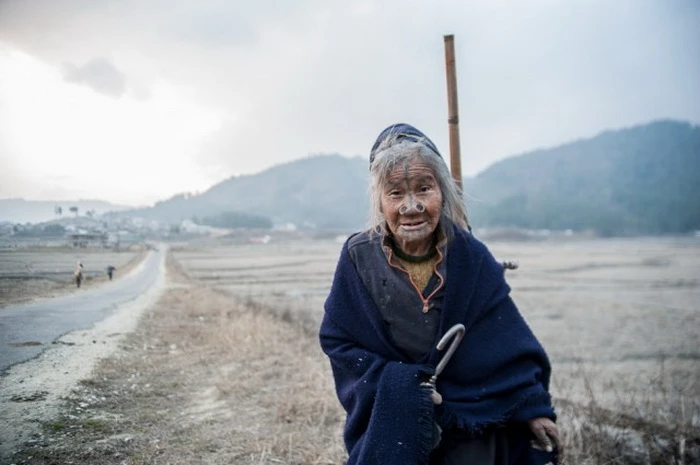
Traditional face tattoos and nose plugs of the Apatani tribe
The Apatani are a small ethnic group of around 26,000 people living primarily in the eastern Himalayas of northeastern India. In the early 1970s, the government banned facial tattoos and nose plugs. Because these modifications caused difficulties for women seeking work in modern cities, the practice has all but vanished today. 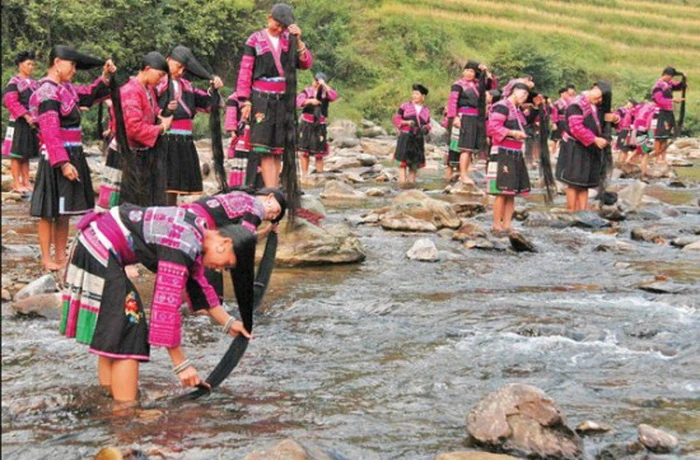
The Long-Haired Women of the Yao Tribe
A far gentler tradition belongs to the Red Yao women of Huangluo village in China. Known for their extraordinary locks, which can reach up to two meters (six feet) in length, these women cut their hair only once in their lives—at age 16—as part of a coming-of-age rite of passage. 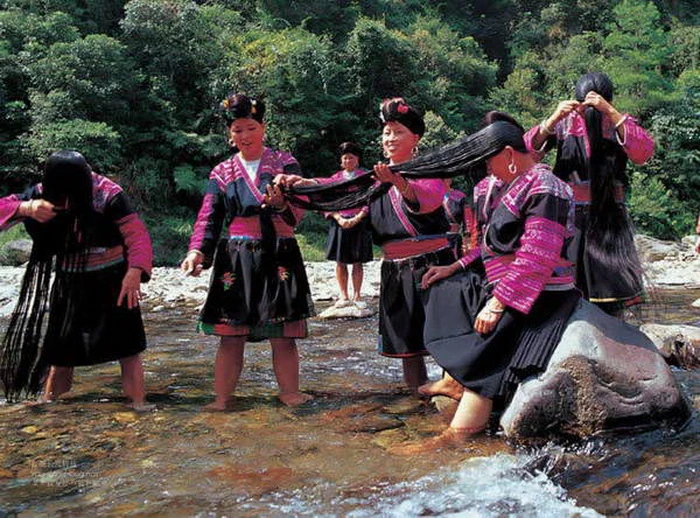
Long-haired women from Huangluo Village, China
Historically, only a woman's husband (and then only on their wedding day) and children were permitted to see her hair unwrapped. When washing their hair in the river during summer and autumn, women kept it carefully veiled under a blue scarf. Tradition dictated that if an outsider or local man caught a glimpse of an unmarried woman's hair, he was forced to live with her family for three years as a son-in-law. Fortunately, this custom was abolished in 1987, allowing these women to freely show off their lustrous black locks to the world.