Risqué Vintage Postcards Featuring Dancers of the Casino de Paris (13 photos)
The legendary Casino de Paris music hall at 16 Rue de Clichy, in Paris's 9th arrondissement, boasts a far richer history than most realize. The property's roots trace back to around 1730, when the Duke of Richelieu built the first estate on the grounds. Following the French Revolution, the site became the Jardin de Tivoli, a popular outdoor pleasure garden famous for its fireworks displays. In 1880, the venue reopened as the Palais-Théâtre, before architect Édouard Niermans erected the current music hall building in 1891. Despite the name, there was no roulette wheel in sight—just a stage, dazzling revues, and the most daring costumes in Paris. It was here that jazz made its French debut, and where, in 1922, a 100,000-liter pool was installed right on stage. It was also where postcards like these were brought to life. 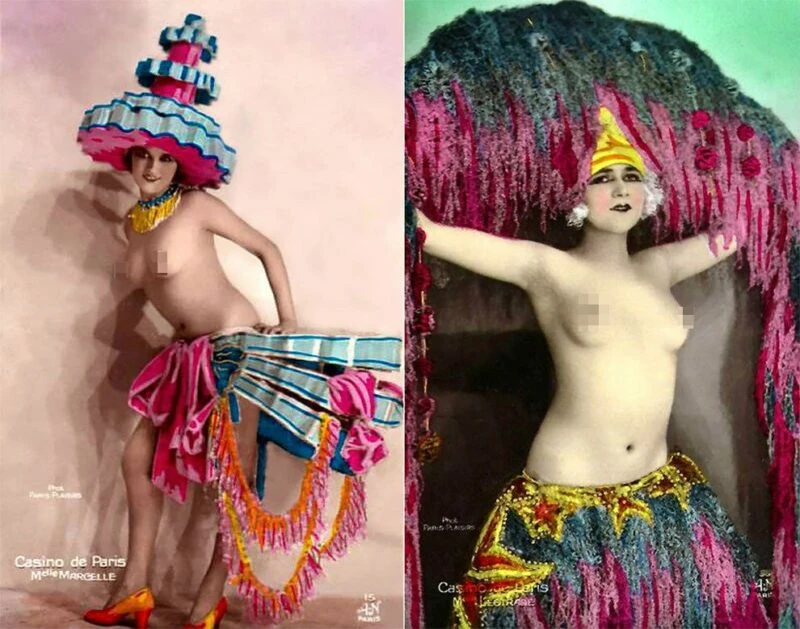
Postcards You Couldn't Send by Mail
Known as "French postcards" both at home and abroad, these small-format cards featured a photograph on the front and a standard postcard backing. Produced in Paris from the late 19th century onward, they were never actually meant to be mailed—doing so risked heavy fines and prosecution under obscenity laws. Instead, they were sold under the counter at bookstores, photography studios, and gentlemen's establishments. 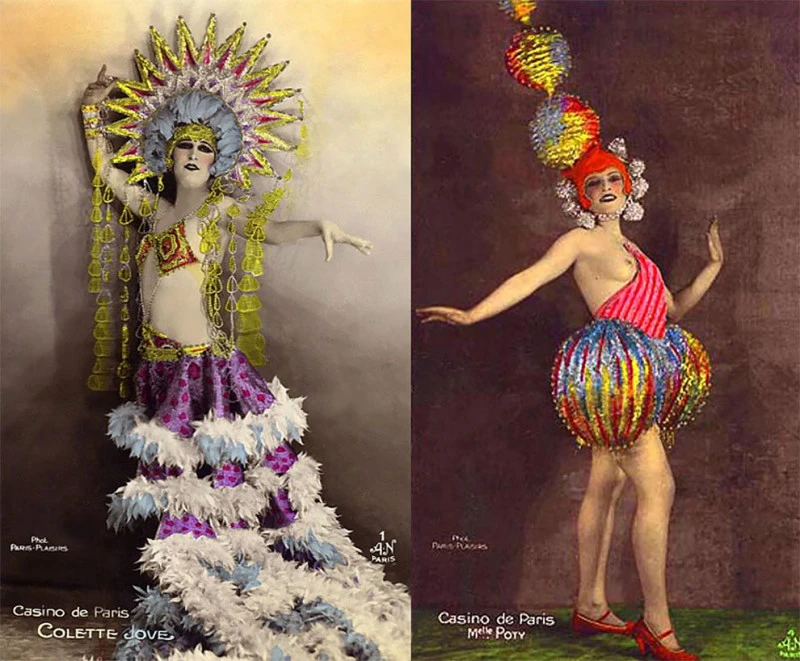
A series published by Armand Noyer, featuring over a hundred hand-tinted postcards.
This particular collection featuring Casino de Paris dancers was released by Parisian publisher Armand Noyer (A. Noyer). The photographs were taken by Lucien Walery, a prominent studio photographer who worked with Parisian cabaret stars from the early 1900s through the late 1920s. Born Stanislaw Ostrorog to a Polish family, his subjects included legendary figures like Mata Hari and Josephine Baker. For his more provocative work, he sometimes signed under the pseudonym "Yrela"—"Walery" spelled backward. 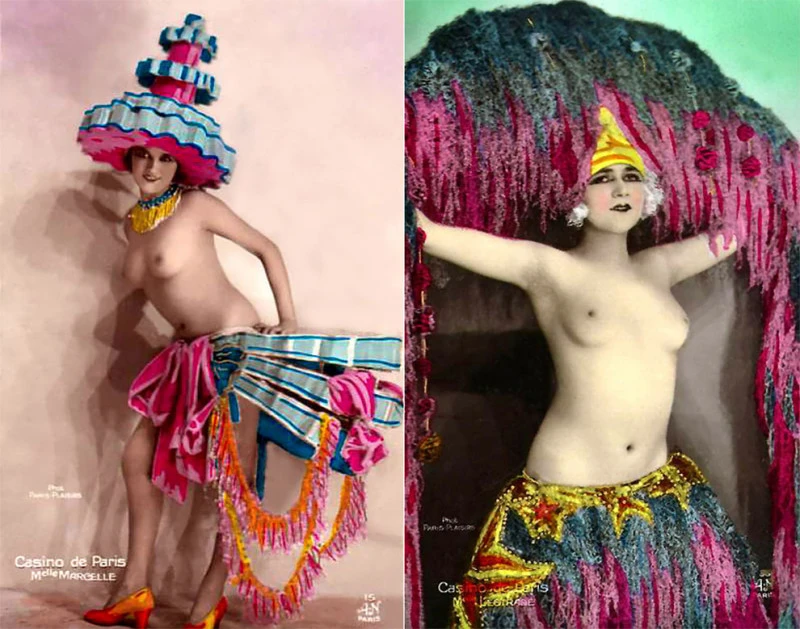
Each card was tinted by hand, making every single copy unique.
Stars and Scandals of Paris's Premier Stage
The Casino de Paris hosted the greatest performers of the era. Jeanne Bourgeois made her debut here in 1895 under the stage name Mistinguett, eventually becoming the highest-paid female entertainer in the world. In 1919, her legendary legs were insured for 500,000 francs—an astronomical sum at the time. Maurice Chevalier, Josephine Baker, Serge Gainsbourg, and Zizi Jeanmaire all graced this iconic stage. 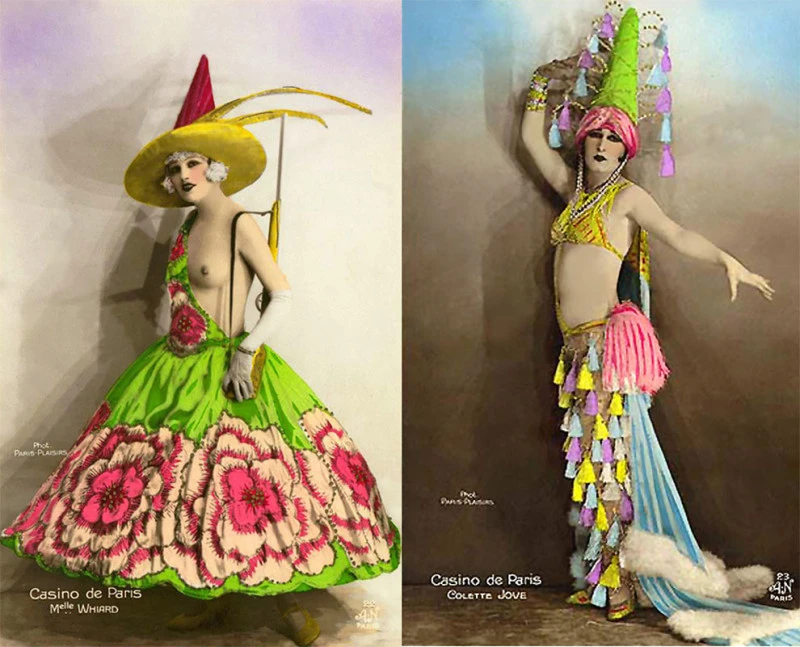
The names of most of these dancers have been lost to history.
In 1946, the venue sparked another global sensation. Micheline Bernardini, an 18-year-old Casino de Paris dancer, agreed to model a swimsuit made from just 30 square inches of fabric—a design that creator Louis Réard couldn't persuade any professional fashion model to wear. Dubbed the "bikini" after the Pacific atoll where a nuclear test had taken place just four days earlier, the reveal turned Bernardini into an overnight celebrity, flooding her mailbox with over 50,000 fan letters. 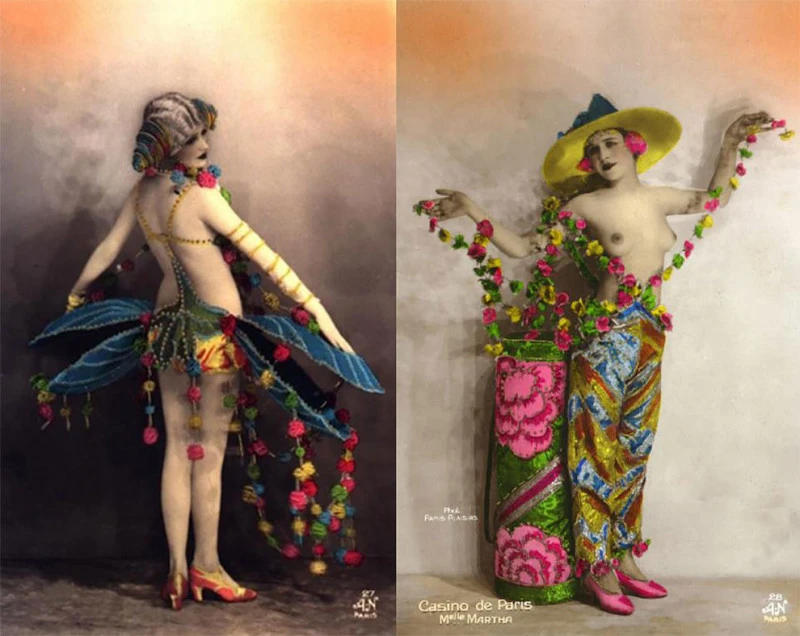
The costumes for the Casino de Paris revues were considered the most risqué in Europe.
Behind the Scenes
The identities of most dancers in these postcards remain unknown. Photo studios relied on a tight-knit circle of models willing to pose nude, and their names were rarely credited. A few performers, however, achieved enough fame to earn named postcards: a dancer known simply as Bijou was featured in her own portrait by Walery, though no biographical details about her survive today. 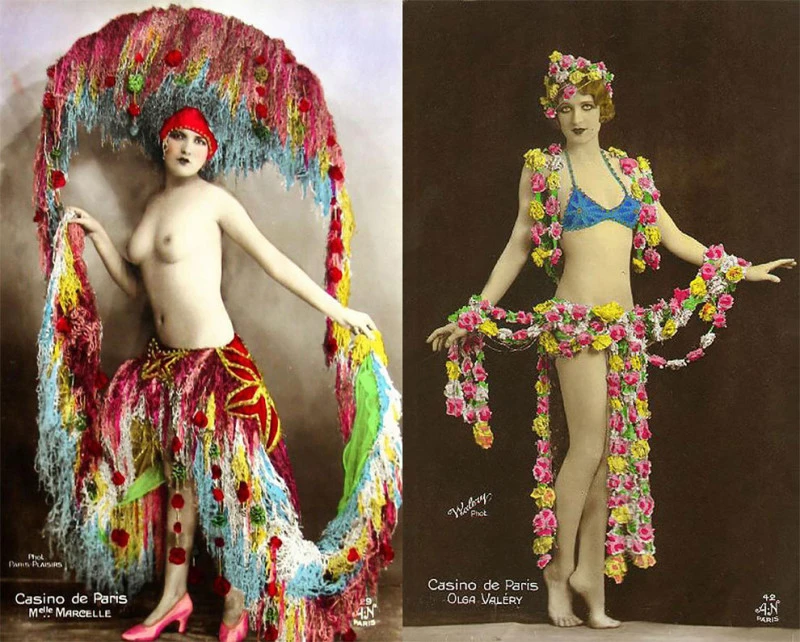
Walery's studio photographed dancers from the Moulin Rouge, Folies Bergère, and Casino de Paris.
Noyer's series stands as a fascinating document of its era. During the 1920s, Paris reigned as the world capital of erotic photography, supporting a thriving industry of photo studios, publishers, and distributors. These postcards were exported across Europe and to the United States, where they earned the nickname "French postcards" precisely because producing them domestically was illegal. 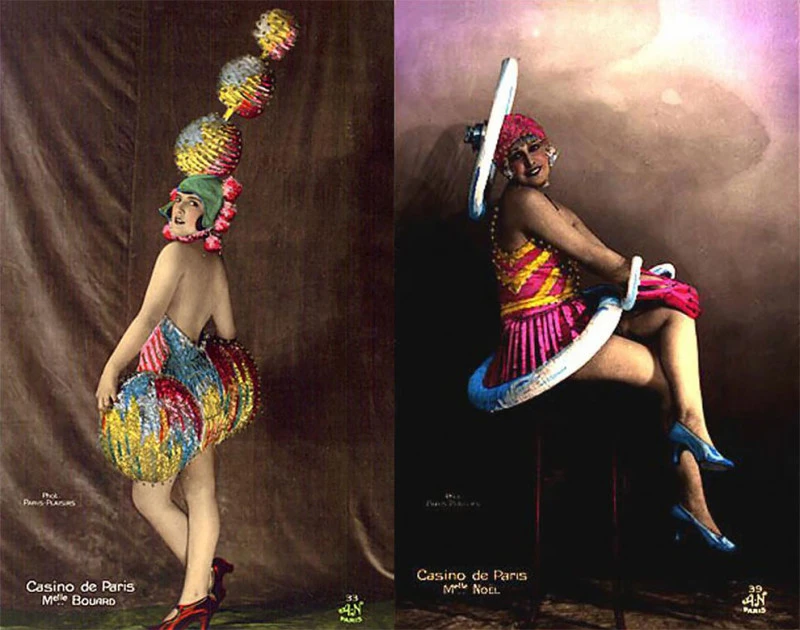
In the US, these cards were called "French postcards"—producing them locally was illegal.
A Stage That Survived It All
The Casino de Paris weathered two world wars, several renovations, and shifting eras. Following a major restoration in 2008, the 1,500-seat hall continues to host musicals and concerts in the very building Niermans constructed in 1891. Its lavish red-and-gold Rococo interiors—complete with carved columns, stained-glass windows, and ornate balconies—remain largely intact. 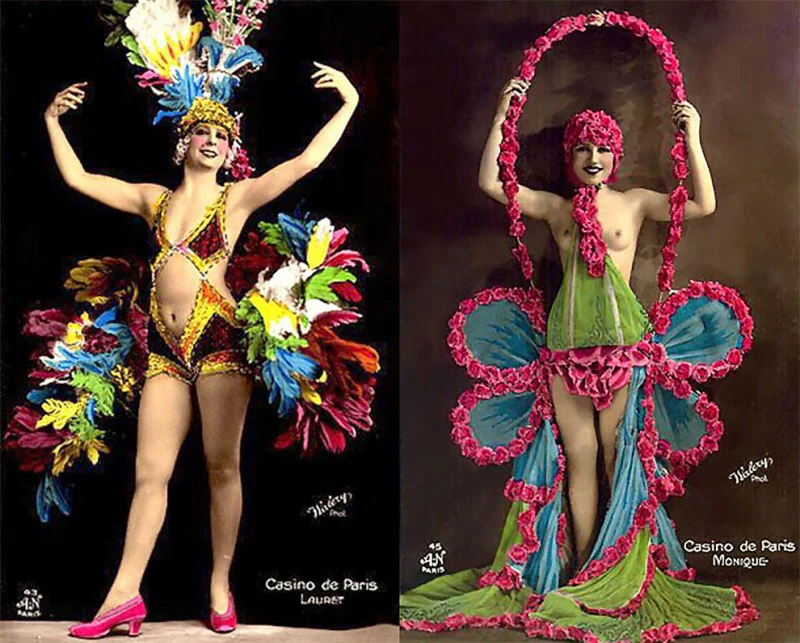
The Casino de Paris remains open to this day in its original 1891 building. 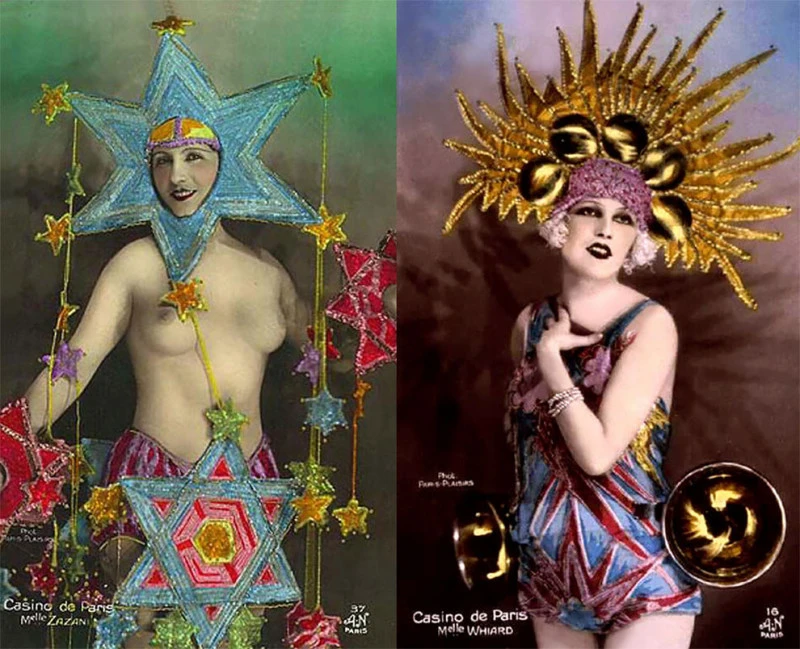
Postcards from this series are now sought-after collectibles worldwide. 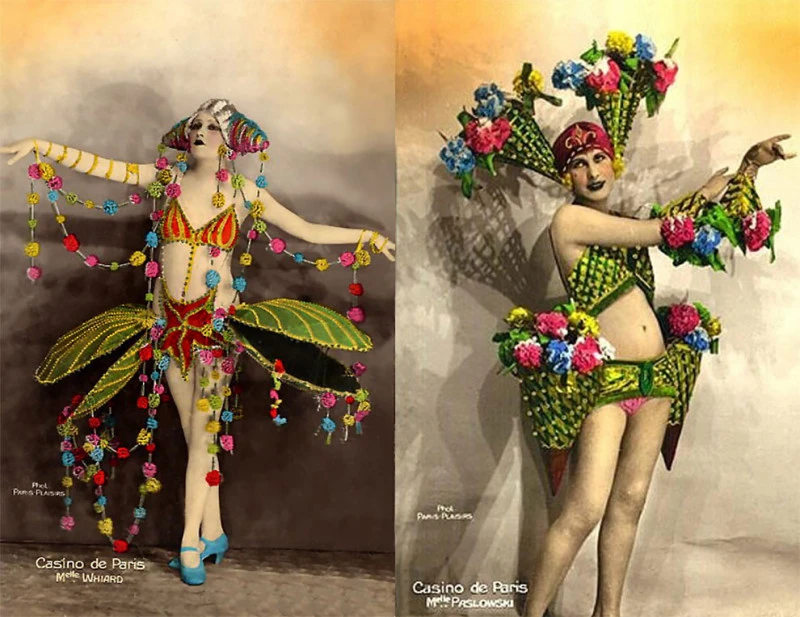
Color was applied over black-and-white prints by hand—a painstaking process. 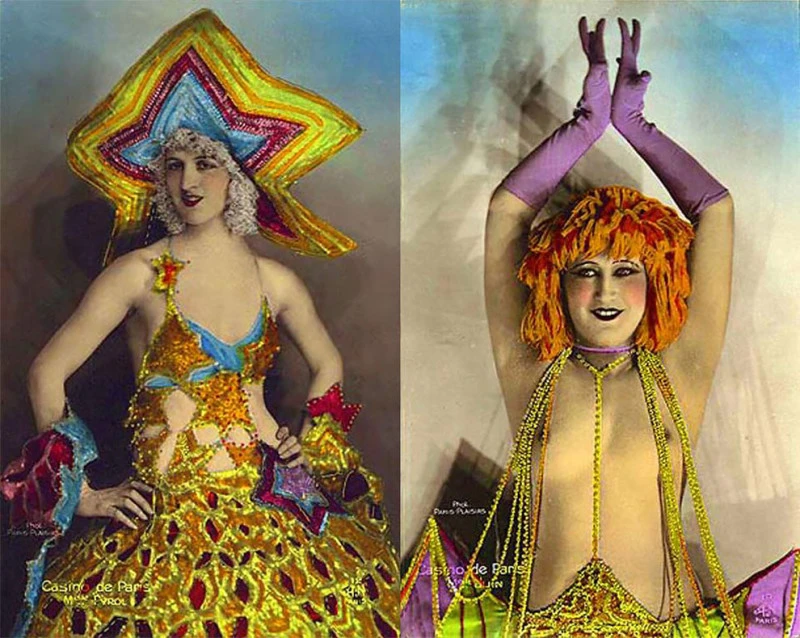
The poses were deliberately classical to disguise erotica as "artistic studies." 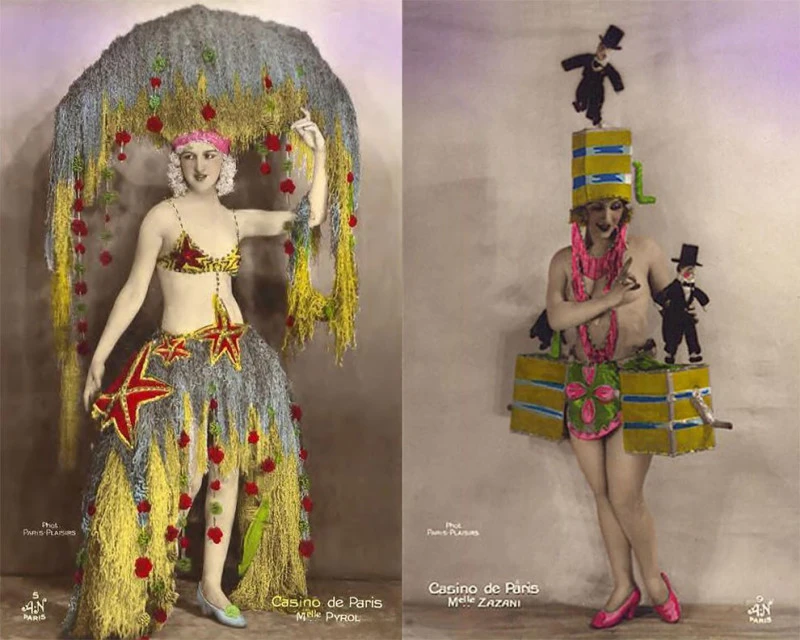
Photographer Lucien Walery captured cabaret stars from the early 1900s through the late 1920s. 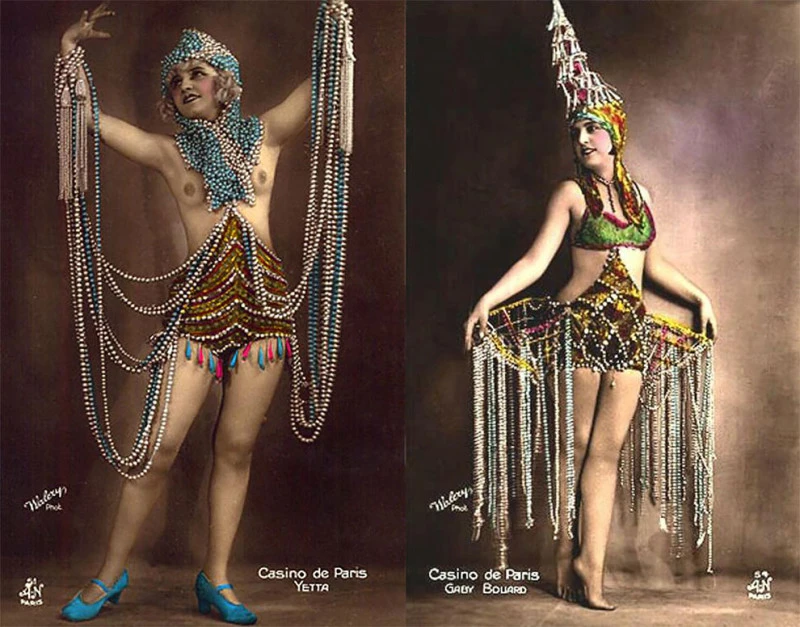
Noyer's series included over a hundred postcards of Parisian music hall dancers.
Each of these cards is a tiny time capsule: the original photograph, the hand-applied tinting, Noyer's print shop, and a plain brown envelope. And somewhere on the other side of the world, a buyer who paid for it, hid it away, and kept it safe. Times have changed, but the postcards remain.