The Double Life of Dennis Rader: Church Leader, Scoutmaster, and the BTK Killer (10 photos)
American serial killer Dennis Rader was the last person anyone would suspect of being a monster. He served as president of his church council, led a local Boy Scout troop, was the life of the party, a devoted husband, and a loving father. Yet under the cover of night for nearly 20 years, he tortured and murdered residents in and around Wichita, Kansas. Relishing his ability to evade capture, he sent taunting letters to the police and local newsrooms, signing them with the moniker "BTK"—short for "Bind, Torture, Kill." 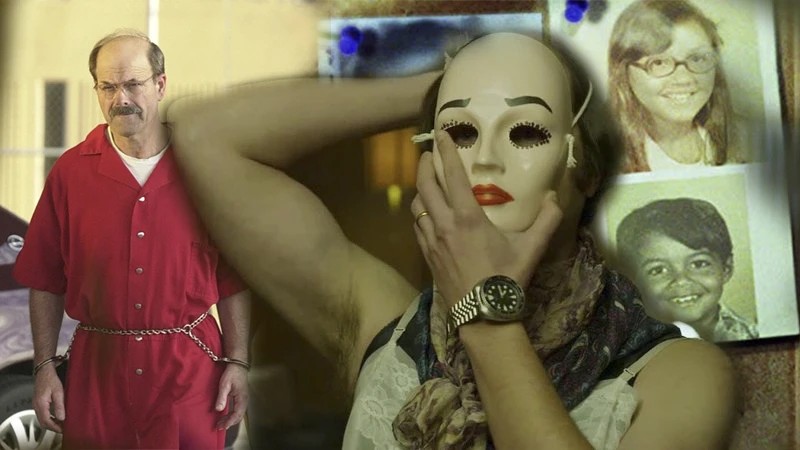
The Secret Life of Scoutmaster Rader
Dennis Lynn Rader was born on March 9, 1945, in Pittsburg, Kansas. His father served in the military, and his mother worked as a bookkeeper. Dennis grew up alongside three younger brothers—Paul, Bill, and Jeff. When Dennis was still very young, his father was reassigned, and the family eventually settled in Wichita. 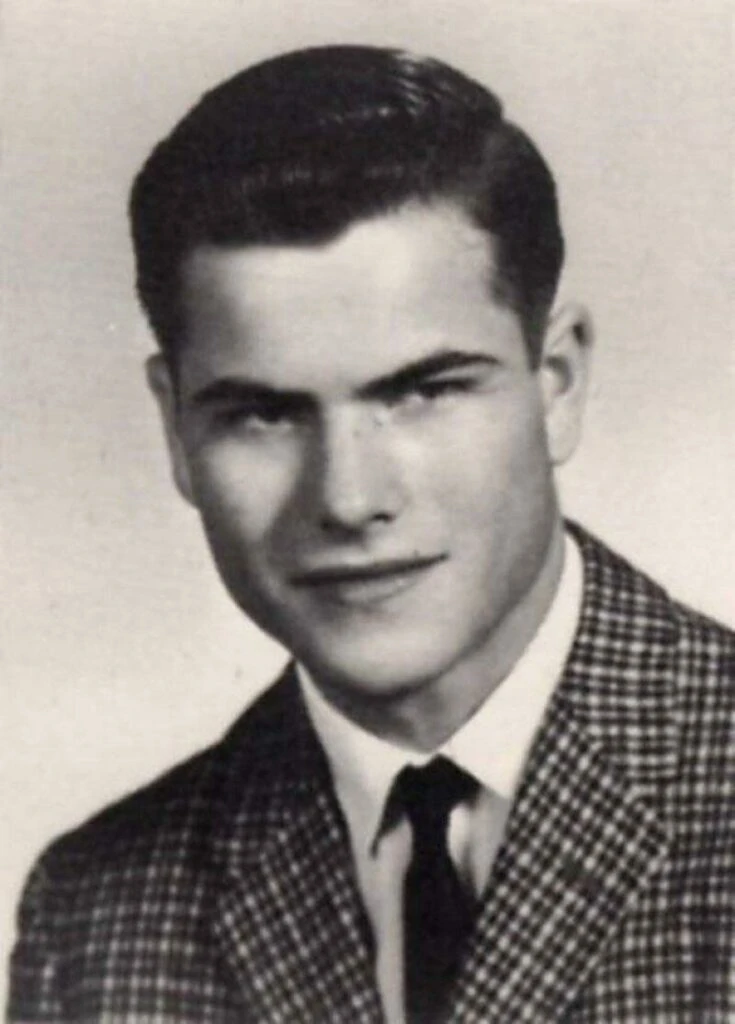
University student Dennis Rader
With his parents working long hours, Dennis was left to care for his younger brothers. Following his arrest, he admitted to psychologists that he had always resented the perceived lack of attention he received as a child. Darker impulses surfaced early: he began torturing and killing small animals, and as a teenager, became obsessed with serial killer Harvey Glatman.
Active in the Boy Scouts, Dennis spent a lot of time outdoors. During one camping trip, he suffered a severe head injury in a fall. The trauma marked a turning point in his behavior, fueling increasingly graphic, sadistic sexual fantasies. Rader later confessed that he would bind his own legs with ropes and pull a bag over his head—disturbing rituals he would later inflict on his victims.
A Man with an Unblemished Past
On the surface, Rader seemed completely unremarkable. He did well in school, attended Kansas Wesleyan University, and enlisted in the U.S. Air Force in 1966, rising to the rank of staff sergeant. Returning to civilian life in 1970, he took a job as a meat cutter at a Leekers IGA supermarket, where his mother worked as a bookkeeper, while enrolling at Butler County Community College. Three years later, he earned an associate degree in electronics and transitioned into the field. 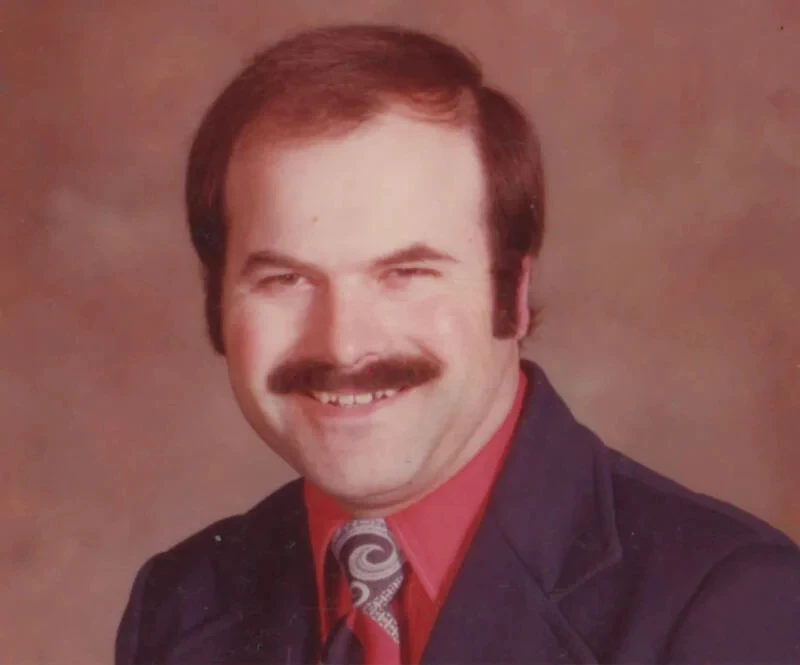
Dennis Rader, 1982
In 1971, while still in college, Dennis married Paula Dietz. The couple welcomed a son, Brian, in 1975, and a daughter, Kerri, in 1978. Rader continued his education at Wichita State University, graduating in 1979 with a Bachelor of Science in Administration of Justice. By the early 1990s, he had been elected president of his local Lutheran church council and was actively leading a local Boy Scout troop.
Rader appeared to be living the ideal American dream: a steady career, a loving family, a comfortable home with a swimming pool, and weekend barbecues in the backyard. But behind this respectable facade lurked a terrifying double life. On the night of January 15, 1974, while his wife Paula slept peacefully at home, Rader committed his first murder.
A Reign of Terror in Wichita
Rader broke into the Otero family home through the back door and brutally murdered everyone inside: 11-year-old Josie, her 9-year-old brother Joseph, and their parents, Joseph Otero Sr. and his wife Julie. Before leaving, he photographed the victims' bodies and stole pieces of their underwear. He then returned home, showered, and casually got ready for morning church service as if nothing had happened. 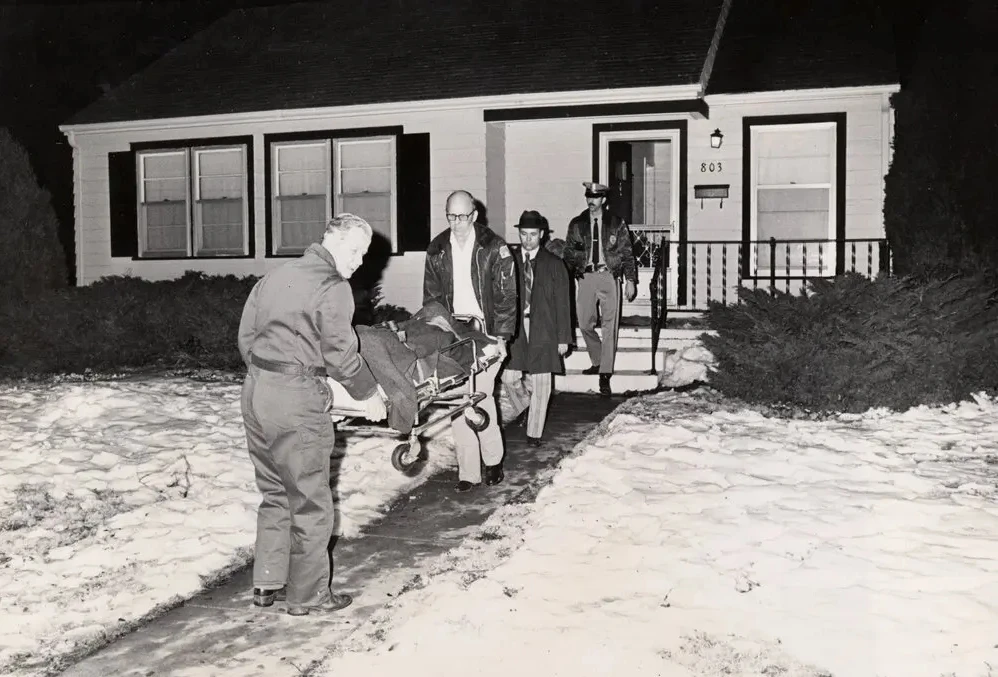
Police remove the bodies of the victims from the Otero family home
Nine months after the slayings, a young man falsely confessed to the Otero murders, claiming he had committed the crime with two accomplices. Furious that someone else was taking credit, Rader's vanity took over. He wrote a note detailing facts about the crime scene that only the killer could know, then stashed it inside an engineering book at the Wichita Public Library.
He then called a local newspaper with instructions on where to find the letter. In the message, he dubbed himself "BTK" and declared his intention to strike again. That same year, Rader broke into another home, stabbing college student Kathryn Bright to death and shooting her brother, who survived the attack while trying to protect her.
When Rader's wife became pregnant, he went quiet, pausing his killing spree for three years. But in 1977, he struck again, murdering Shirley Vian Relford and Nancy Fox. Ligatures were his preferred weapon, though he occasionally used a knife. He rarely fired a gun, fearing the noise would draw unwanted attention. 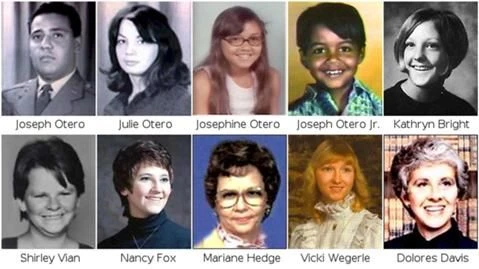
The killer's victims
Rader subjected his victims to prolonged torment before taking their lives, meticulously photographing each step. At crime scenes or later in private, he would put on his victims' underwear, a female mask, and a wig, binding himself to pose for self-portraits. Stepping into the role of his victims allowed him to relive the thrill of his crimes long after they were committed.
Living with a Monster
Despite Rader's increasingly careless behavior around the house, his wife suspected nothing. On one occasion, after reading a published BTK letter in the paper, she casually remarked to her husband that the killer made the same grammatical errors he did. Another time, she discovered a taped-up box in the basement filled with victims' belongings. Incredibly, neither raised red flags for her. 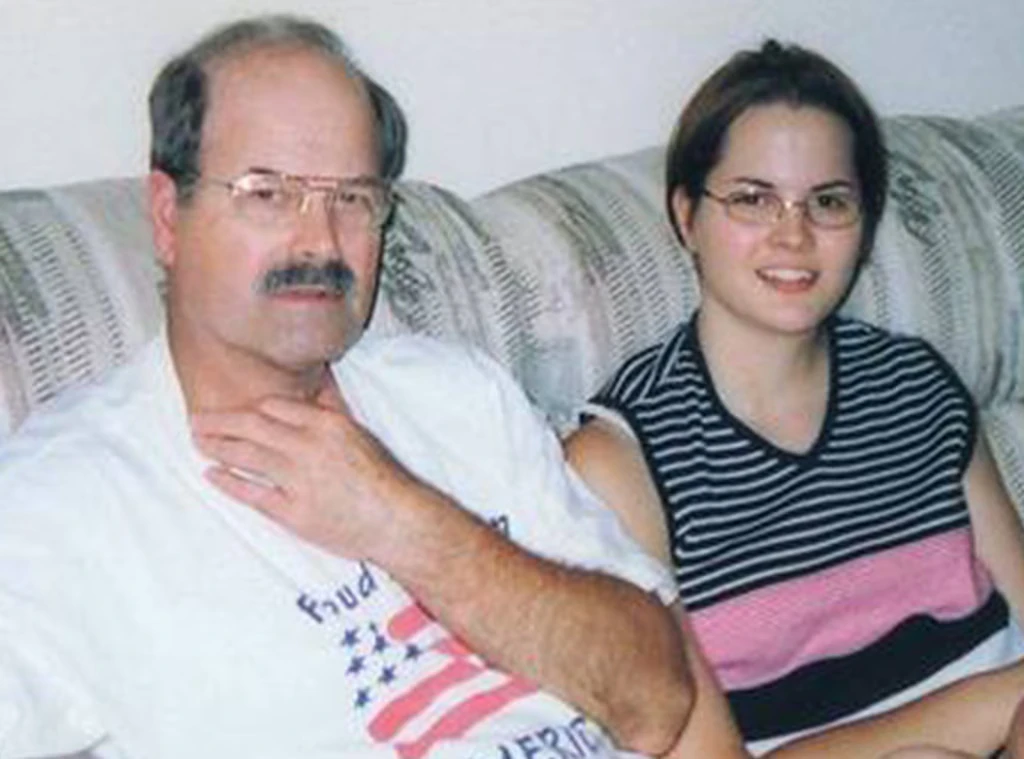
Rader with his daughter, Kerri
His children also saw little out of the ordinary. His daughter, Kerri, later recalled a terrifying moment during an argument when her father grabbed her brother by the neck and began choking him. Kerri and her mother had to physically pull him off to save her brother's life. Yet even that frightening outburst was dismissed as an isolated incident; his family rationalized that such fits of rage were rare and thought little more of it.
Meanwhile, Rader’s rampage continued. In 1986, he claimed his ninth victim, 28-year-old Vicki Wegerle. He murdered her in her home while her two-year-old child watched from a playpen. Fortunately, the toddler was physically unharmed. After this crime, Rader went dormant for five full years, securing a job as a compliance officer in the Wichita suburb of Park City, where colleagues viewed him as a strict but dedicated official.
The Final Victim and Arrest
On January 19, 1991, Rader struck for the tenth and final time, killing 68-year-old Dolores E. Davis. Because she lived alone, her body was not found until February 1. After years of silence, Rader resurfaced between 2004 and 2005, sending a barrage of taunting letters and packages to police and media outlets. He detailed his crimes and mocked law enforcement's inability to catch him—unwittingly setting his own trap. 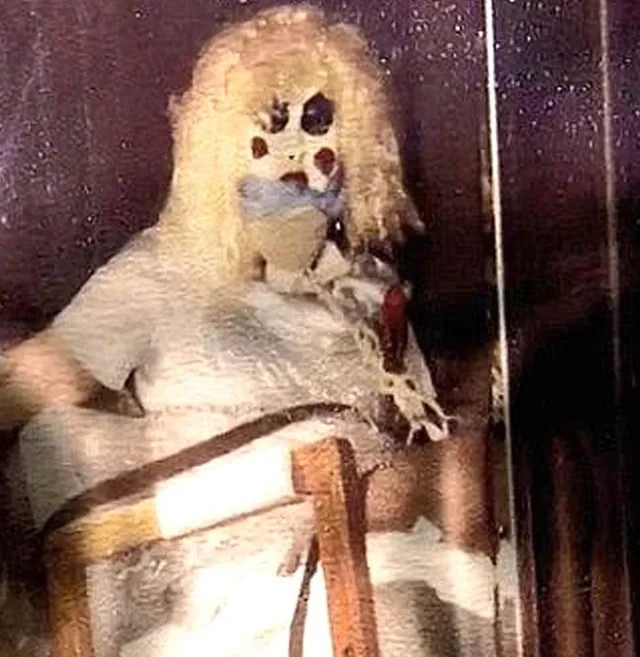
A photograph taken by Rader at a crime scene, depicting himself wearing women's underwear, a mask, and a wig
On February 16, 2005, he mailed a floppy disk containing a text file to the Fox TV affiliate in Wichita. Digital forensics experts examined the disk and recovered a deleted Word document containing metadata. The embedded properties listed "Christ Lutheran Church" and identified the author as "Dennis." It didn't take investigators long to discover that Dennis Rader served as president of that very church council.
To confirm their suspicions, investigators obtained a warrant for tissue samples from a Pap smear his daughter Kerri had recently undergone at a university clinic. Her DNA was matched against tissue found under the fingernails of victim Vicki Wegerle. The familial DNA test yielded a direct match, giving authorities the evidence they needed to secure an arrest warrant. 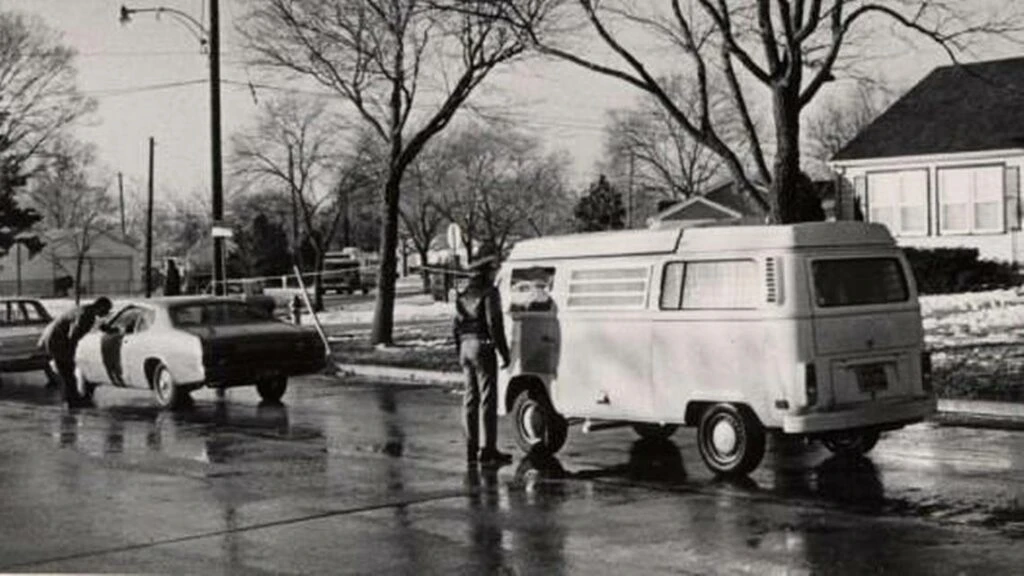
The moment of Dennis Rader's arrest
Police intercepted Rader on February 25, 2005, while he was driving home from work. When he resisted arrest, officers forcibly subdued him. Subsequent searches of his home and church by police and the FBI uncovered a trove of incriminating evidence: crime scene photos and videos, sex toys, masks, wigs, and personal trophies taken from his victims.
Trial and Sentencing
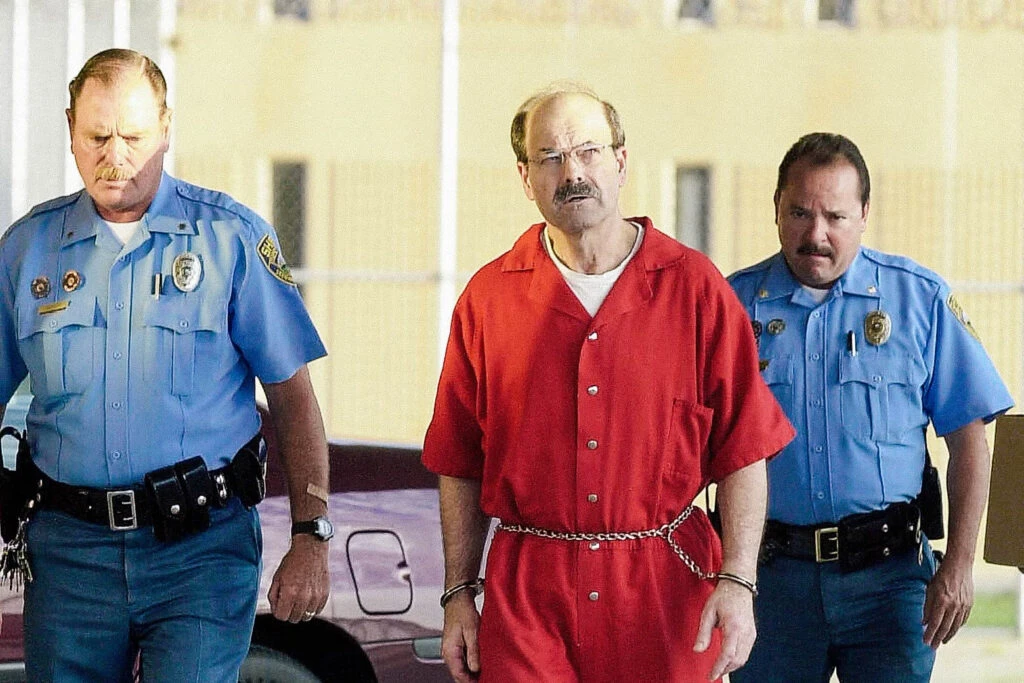
On February 28, 2005, Rader was formally charged with ten counts of first-degree murder, with bail set at $10 million—an amount his family could not pay. During his arraignment on June 27, 2005, Rader pleaded guilty to all ten murders, describing his crimes in graphic detail. That same day, his wife filed for emergency divorce. 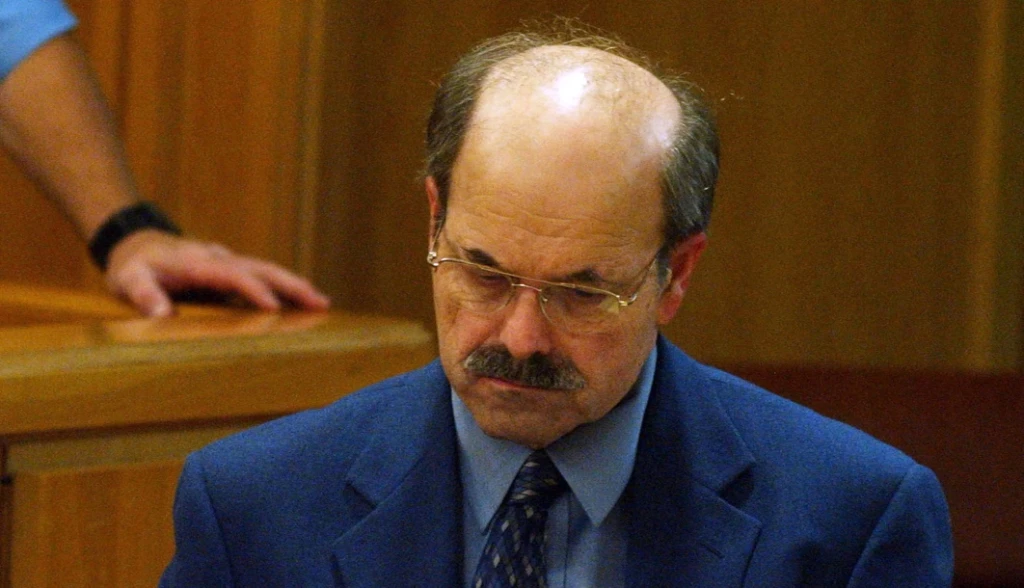
Dennis Rader in court
At his sentencing hearing on August 18, the 60-year-old killer delivered a rambling 30-minute statement showing no remorse whatsoever. The judge sentenced him to ten consecutive life terms, making him eligible for parole only after serving 175 years. Rader’s home was later auctioned for $90,000, with the proceeds distributed to the victims' families.
Rader was sent to the maximum-security El Dorado Correctional Facility, where he was placed in solitary confinement for his own protection from other inmates. Granted privileges for good behavior, he was allowed access to television and newspapers. His children have never visited him behind bars, though his daughter Kerri sent him a letter stating she had forgiven him. She later penned a memoir titled
A Serial Killer's Daughter: My Story of Faith, Love, and Overcoming
. 
The story of Dennis Rader is a chilling reminder that a monster can hide behind the guise of an upstanding citizen. Do you think subtle red flags can reveal a person's violent tendencies, or are predators like Rader truly capable of wearing a convincing mask until the very end?